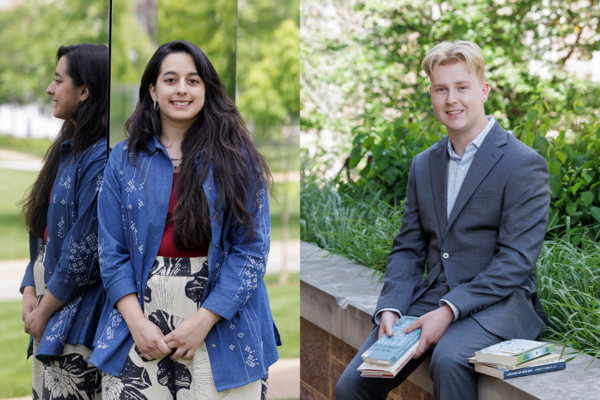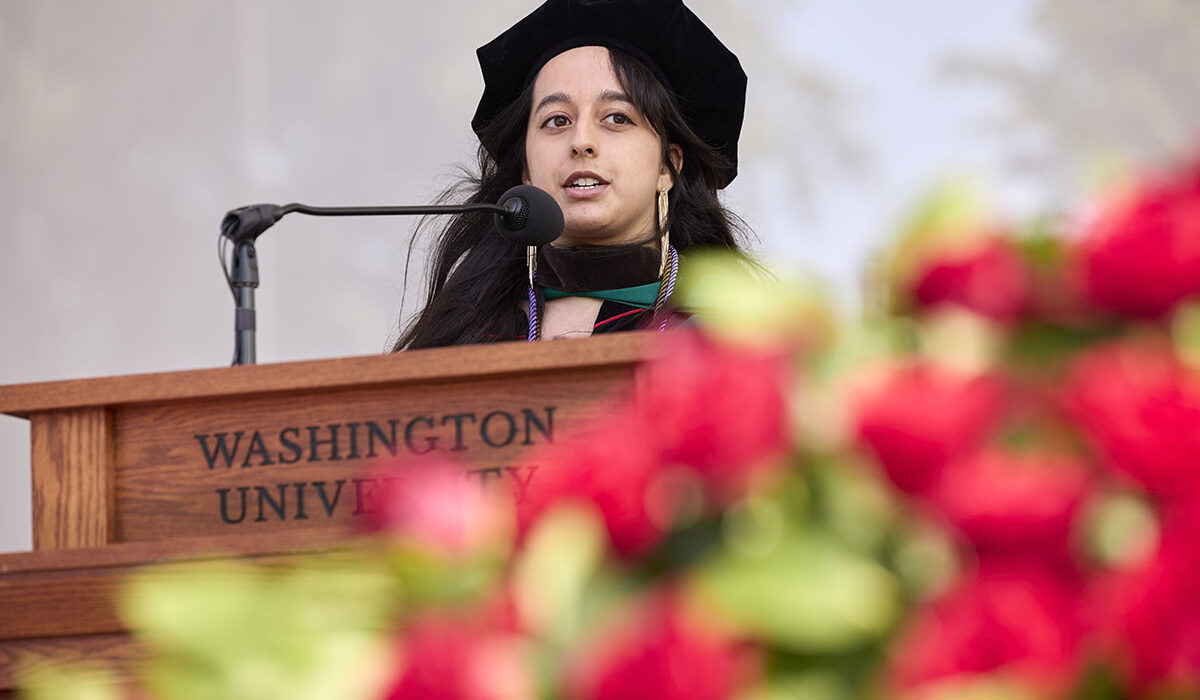
Graduate student speaker Sejal Popat, who earned a master’s in fine arts in illustration and visual culture from the WashU Sam Fox School, delivered a message to the Class of 2026 at Washington University in St. Louis during the May 15 Commencement ceremony on Francis Olympic Field.
Below are Popat’s prepared remarks to the graduates.
Good morning everyone. My name is Sejal Popat, and I’m graduating from the MFA in Illustration and Visual Culture program.
I am honored to be here and to have this chance to speak with you all on such an important day. I want to acknowledge the families, friends, mentors and loved ones who have helped us along this journey. I am especially grateful to my parents for their encouragement and love.
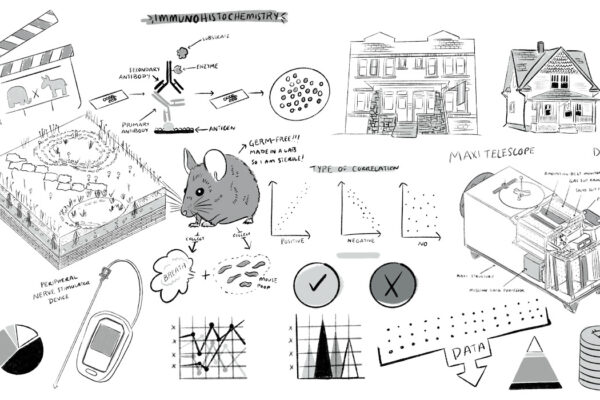
Before coming to illustration, I worked for several years as a software engineer in data
visualization. At the time, it was the perfect intersection of my interests in visual art,
communication and technology. I’ve always been driven by curiosity, and maybe even more specifically by an inability to let confusion go unresolved. For as long as I can remember, drawing has been one of the ways I make sense of things. When ideas feel too large or abstract, I try to bring them down to earth by diagramming and drawing.
When I first began to take drawing more seriously, I approached it like many of us do when learning a new skill. We usually want to know the right way to do things. We crave a kind of predictability in outcomes. In art, this often looks like striving for technical accuracy: perfect perspective, realistic rendering or exact likenesses. In other fields, it might look like striving to optimize a process for efficiency or increase productivity.
Those things do matter, but I began to grow out of this and find satisfaction in surprise. I realized that the work that felt most meaningful to me required some improvisation and the risk of failure. I began to see that dead-ends and frustration can be productive. My drawings were less about executing a fully formed plan and more about discovery through process. Sometimes I would begin with only a fragment of an idea and follow it without fully knowing where it would lead. And often, those uncertain beginnings produced work that felt more alive than anything I could have pre-planned.
I think there’s something important in that for all of us, especially now.
Graduation is a moment of change. It is a time when people are often asking us what’s next, and we feel pressure to have a clear idea of our future. But I suspect many of us are leaving here with a mix of feelings, ranging from excitement and relief to anxiety over uncertainty and a rapidly changing world. These moments of change and growth are not really about becoming more certain, but becoming more able to handle and embrace what is unknown.
Maybe part of becoming fully ourselves is learning how to remain curious even when we do not know the outcome. Learning how to tolerate ambiguity long enough for something unexpected to emerge.
That has been one of the most valuable lessons for me during my time here. I had switched from my job in software engineering to a program in illustration knowing that it would be a risk, but also that it aligned more closely with my own strengths and interests. We owe ourselves this kind of alignment and introspection about what we do best and what brings us fulfillment.
At a time when so much of life is mediated through systems that encourage speed and
reactivity, I think there is something deeply valuable about remaining present enough to make things thoughtfully, slowly and without guarantees of perfection. We can do this in many different ways, whether it’s through creating art, building tools with transparency and autonomy in mind, community organizing, teaching, researching or simply making space for another person’s perspective. When we act with these values in mind, we also remind ourselves that we are active participants in the world.
I feel most aware of my own agency when I am creating something and sharing it with others. It doesn’t matter if it is a painting, a story or a really good meal. What matters is the feeling of having some control, of building a skill and offering something that might shift another’s perspective. Creative work is radical in that it challenges you to imagine something other than that which exists. It is one among many ways of nurturing hope. Each day we are flooded with information that is too overwhelming for an individual to really process on their own. We need to feel a sense of being interdependent. To see others and be seen. For me, it is through art and writing.
I encourage you to think about this. What do you do to maintain a sense of agency and
interconnection? When we stay present, connected and curious about others, we cultivate relationships based on our own values. From here, something larger can grow. Communities, movements and friendships all begin with a few people choosing to acknowledge each other’s perspectives and challenges.
So as we all enter a new chapter in our lives, I hope we allow ourselves to keep evolving and to stay open to changing directions. I hope we resist the idea that we must already have the full picture figured out. Some of the most meaningful work and experiences begin as a wandering line. You follow it for a while without knowing exactly what it will become. Slowly — through patience, revision and time — something begins to take shape.
Thank you, and congratulations to the Class of 2026!