As part of Washington University in St. Louis’ ongoing work to transform undergraduate STEM education and support low-income and first-generation STEM students, the Office of the Provost is launching the WashU STEM Exchange, a new community where educators, advisers and researchers in science, technology, engineering and math can share strategies and interventions and track outcomes.
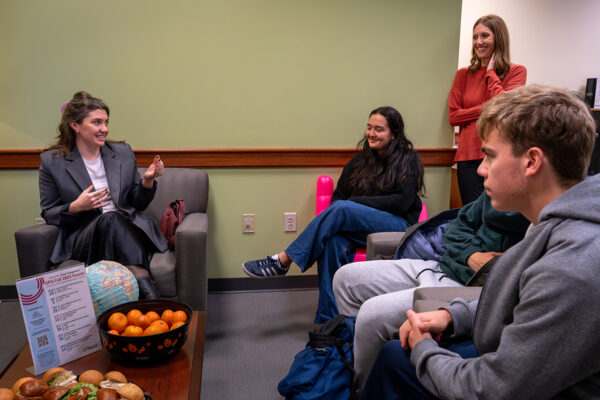
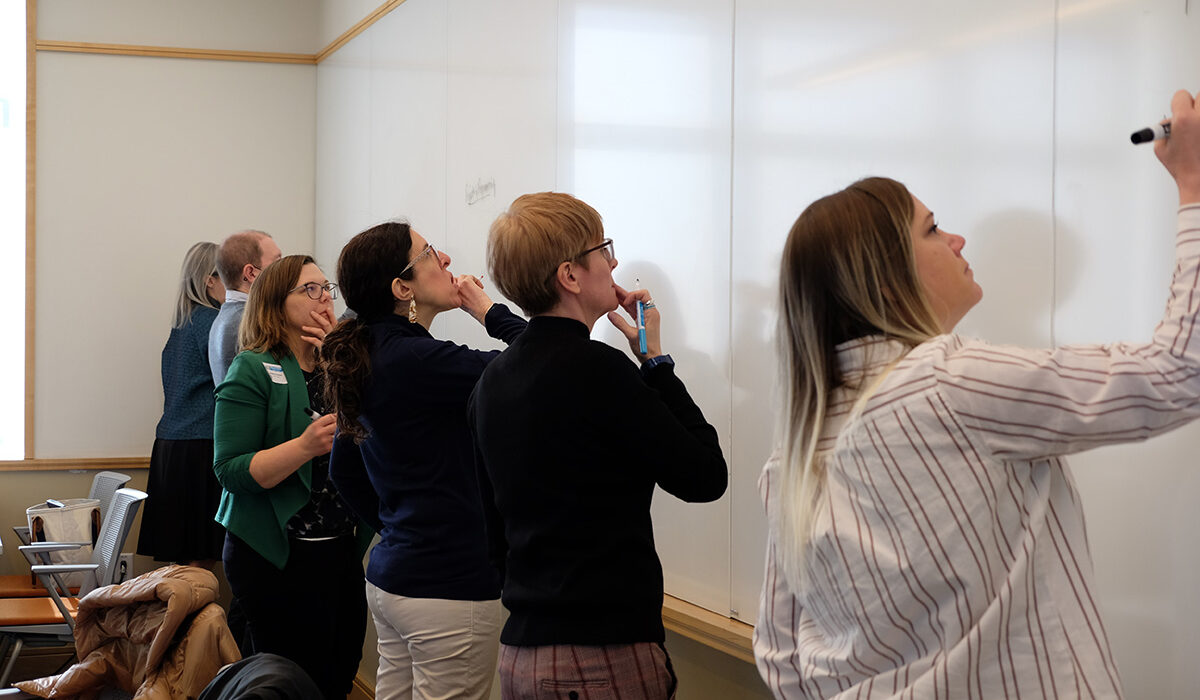
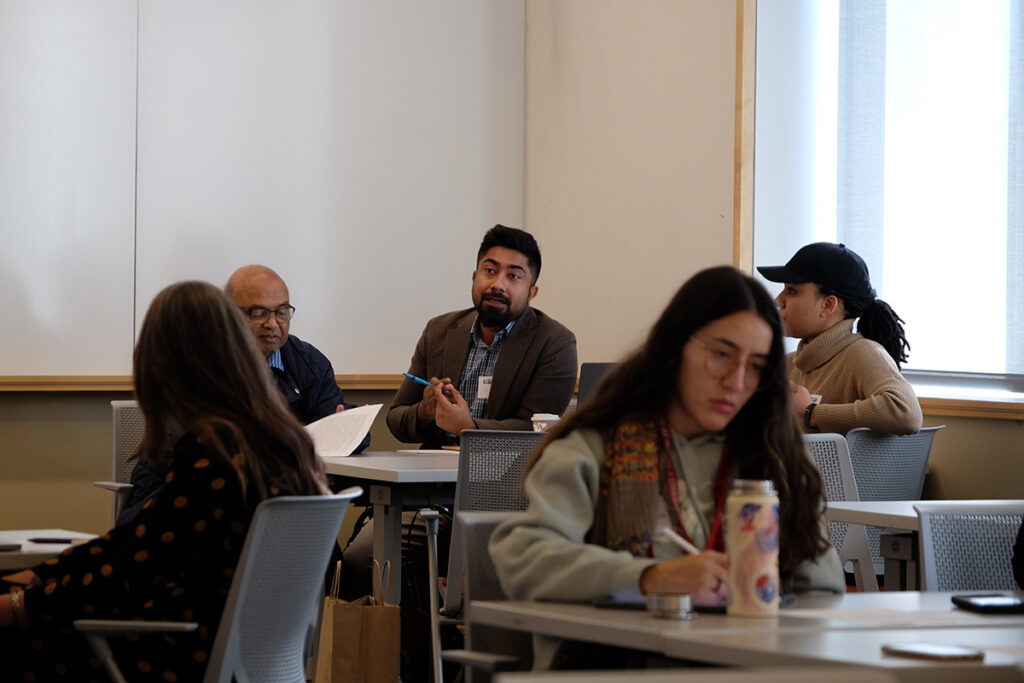
Kurt Thoroughman, an associate professor of biomedical engineering at the McKelvey School of Engineering, announced the initiative Jan. 8 at iTeach, a biennial conference hosted by the Center for Teaching and Learning (CTL) with support from WashU Libraries, the Office of the Provost and Arts & Sciences Information Technology. The full-day conference drew about 220 faculty members and featured 40 panels, workshops and presentations on a range of topics, from the university’s new artificial intelligence (AI) literacy Canvas module to creative course design to innovative assessment practices.
“The goal of the WashU STEM Exchange is to bring people together from across the university to look at our strengths and our opportunities and to build a community of practice,” Thoroughman told participants in the iTeach panel “Transforming Undergraduate STEM Education at WashU and Nationwide.”
“As we’re building iteratively over the long haul, we can compare notes with our peers and discover new ways to do better by our students and measure what we are doing so we can continue to build.”
This work will build on the ongoing efforts of the Office of the Provost to support faculty in incorporating evidence-based inclusive teaching methods that improve student outcomes and close disparity gaps. Internal data show that, following national trends, first-generation and Pell Grant-eligible students entering WashU with an interest in STEM are less likely to graduate with a STEM degree than their peers. The data also show that many of the first-generation and Pell students who do not persist in STEM majors or do not graduate struggle in large, entry-level courses.
“The kind-of good news is that we can find these students early,” Jennifer Smith, vice provost for educational initiatives, reported to iTeach participants. “All of our students come in with incredible talent, but their educational experiences and background are variable, so we do see disparities. But we believe that if you are good enough to get admitted to WashU, you should have an equitable opportunity to thrive, not just in college, but in the field we admitted you to study.”
To that end, Smith’s team has been collecting relevant student data to inform teaching strategies and interventions, as outlined in the 2025 National Academies of Sciences, Engineering and Medicine report “Transforming Undergraduate STEM Education: Supporting Equitable and Effective Teaching.”
One example is the creation of department dashboards, currently being piloted in math and computer science, that track trends in recruitment, retention and graduation rates. STEM departments also closely monitor student performance in entry-level courses, connecting students who struggle on their first exams to Learning Center resources, including peer coaching. In addition, faculty also are encouraged to deploy surveys that include questions about sense of belonging in their classrooms, a known factor in student success.
“The goal is to identify where the leaks are in the pipeline early so that we can look at those course experiences and see how we can do better,” Smith said. “It’s really about helping departments think of themselves as an ecosystem with inputs and outputs and track the student journey through that system.”
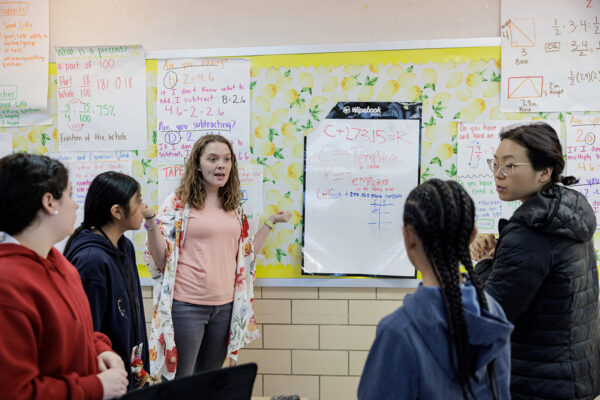
Several WashU faculty members discussed some of their own unique strategies at the iTeach conference. For instance, Janie Brennan, teaching professor at McKelvey Engineering, shared her success strengthening the student-teacher relationship through “instructor trivia.” During the break in her two-hour chemical engineering course, she asks students to guess a fun fact about herself, such as her favorite pizza topping. Participation is voluntary and, of course, not graded. Still, Brennan said the game gives students a much-needed cognitive break during a challenging class and, significantly, has strengthened her students’ connection to her and to one another.
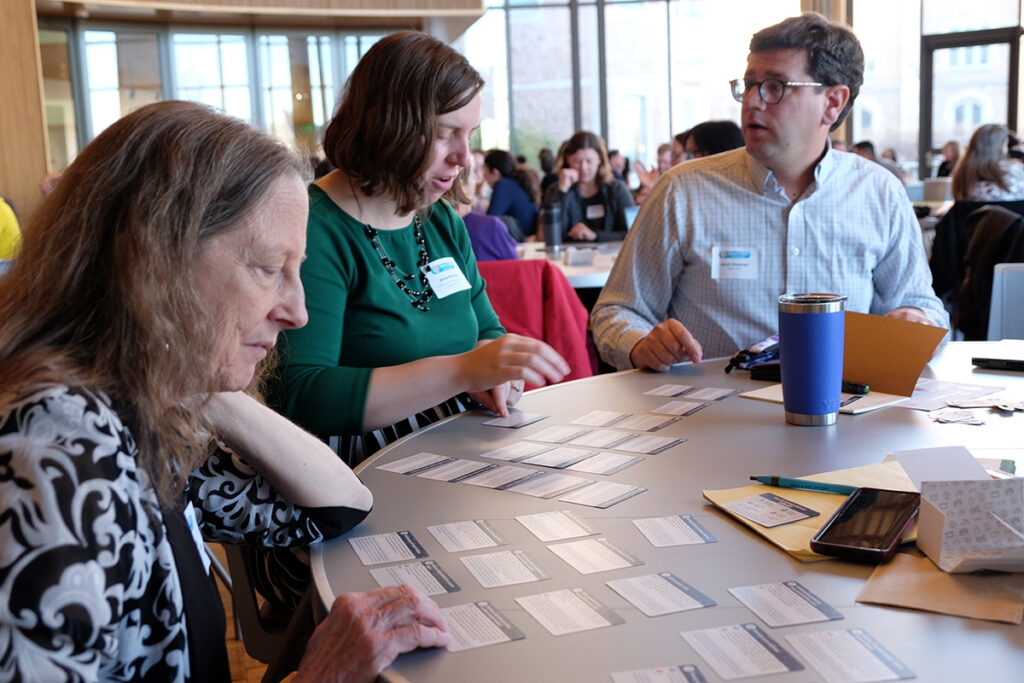
Conference participants also discussed practical ways to vary assessments and provide actionable feedback as well as tactics to establish rapport, such as mastering student names and welcoming students before the semester begins. The CTL also distributed decks of inclusive teaching strategies cards, which highlight proven practices such as diversifying course material, seeking student feedback mid-semester and observing group dynamics.
Thoroughman said new initiatives such as the STEM Exchange and existing programs such as iTeach have the potential to elevate good pedagogy systemwide. He invites educators, advisers, researchers and others who serve STEM students to bring their ideas to the STEM Exchange. The program’s first meeting will take place at 2:30 p.m. Thursday, Jan. 29 in DUC 234 with other meetings scheduled for 1 p.m. Feb. 18 and 2:30 p.m. March 19 in McMillan Hall’s McMillan Cafe. Topics will include how to: provide students opportunities to actively engage in disciplinary learning; leverage student interests, goals, knowledge and experiences to enhance learning; use multiple forms of data to inform improvement; and create a positive classroom culture.
“What the STEM Exchange and programs like iTeach prove is that WashU, one of the nation’s premier research institutions, also cares deeply about good teaching,” Thoroughman said.