
International collaboration leads to cellular mechanobiology discovery
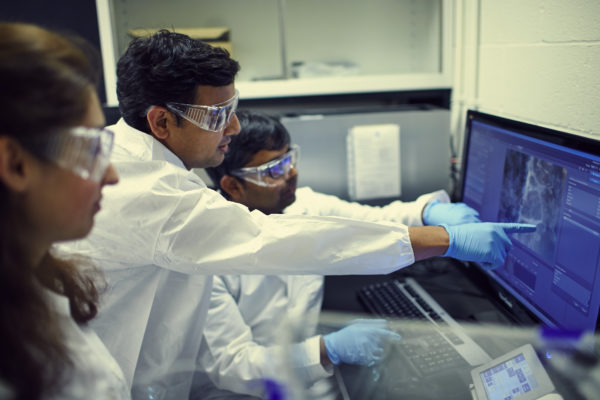
Shumeng Jiang, a doctoral student in mechanical engineering in the McKelvey School of Engineering at Washington University in St. Louis, was part of a team that uncovered previously unknown cell behaviors.
Role of cell group behavior target of $1.9 million award
Amit Pathak, a mechanical engineer at Washington University in St. Louis who specializes in mechanobiology, plans to take a closer look at various aspects of cell group behavior — and their implications for diseases such as cancer — with a prestigious five-year, $1.9 million grant for early-stage investigators from the National Institutes of Health (NIH).

A partnership for well-being
Washington University and the National University of Singapore partnered to present a multi-day symposia, “University Partnerships for Innovation: Advancing Human Well-Being.”
Keeping plant-cell motors on track
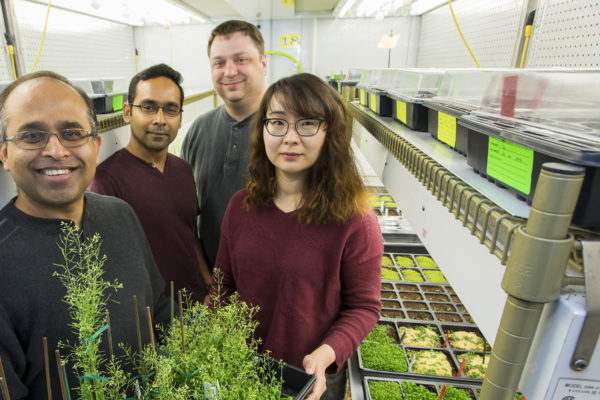
In a growing plant cell, motor proteins called kinesins work as transporters that haul materials built in one part of the cell to the place where they are needed. Now, biologists at Washington University in St. Louis have discovered the molecular brakeman that holds kinesins in check until their cargo is needed.

Advancing well-being with global partnerships
Washington University in St. Louis strives to help solve some of the world’s biggest problems. As such, the university is fully engaged with a global network of partners, via education programs and research initiatives, to develop tangible and lasting solutions. That effort was evidenced when Washington University recently arranged a cross-disciplinary international symposia highlighting the intersection of social policy, engineering and medicine.

Engineers examine chemo-mechanics of heart defect
Elastin and collagen serve as the body’s building blocks. Any genetic mutation short-circuiting their function can have a devastating, and often lethal, health impact. For the first time, new research led by engineers at Washington University in St. Louis takes a closer look at both genetic and mechanical attributes, to better understand a disorder that affects how elastin and collagen function.

New use for a pesky weed
Dandelions are much-maligned weeds, with a paratrooper-like seed dispersal system that makes them difficult to eradicate. However, new research from an engineer at Washington University in St. Louis finds a great benefit in an unlikely place for the pesky dandelion: each of its tiny seeds can be used as a perfect pipette in the laboratory setting.