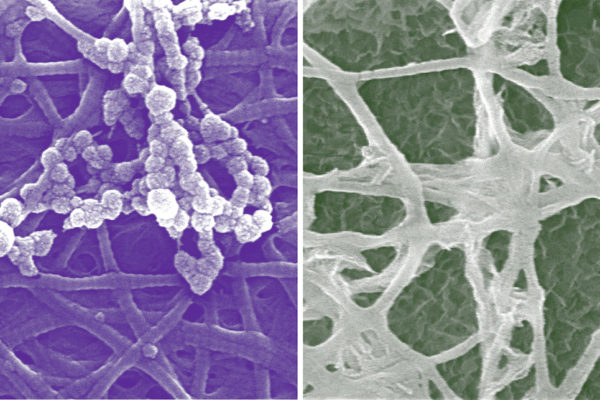
New cellular insights in bone development
Most of us don’t think about our teeth and bones until one aches or breaks. A team of engineers at Washington University in St. Louis looked deep within collagen fibers to see how the body forms new bone and teeth, seeking insights into faster bone healing and new biomaterials.
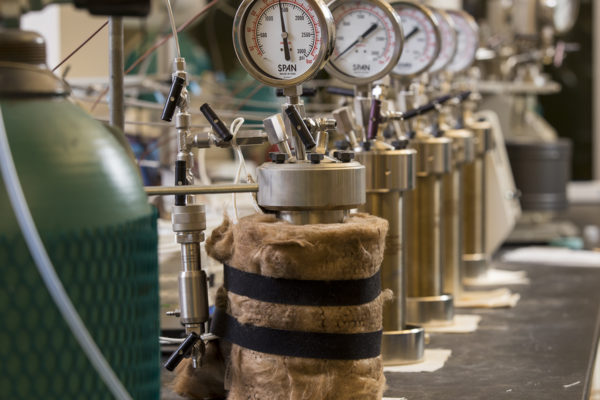
Trap, contain and convert
Injecting carbon dioxide deep underground into basalt flows holds promise as an abatement strategy. Now, new research by scientists at Washington University in St. Louis sheds light on exactly what happens underground during the process, illustrating precisely how effective the volcanic rock could be in trapping and converting CO2 emissions.
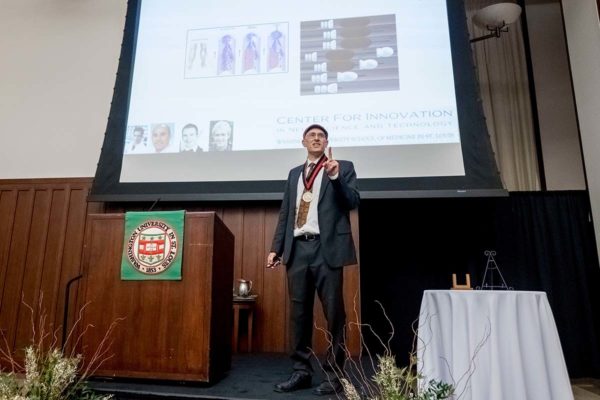
Genin named inaugural Faught Professor of Mechanical Engineering
Guy Genin, an internationally renowned expert in mechanobiology, was installed as the Harold and Kathleen Faught Professor of Mechanical Engineering at Washington University in St. Louis on Feb. 12.

School of Engineering launches master’s in cybersecurity engineering degree
High-profile cyberattacks and data breaches have made cybersecurity engineering one of the fastest-growing careers in the world, yet demand for highly qualified leaders exceeds supply. To meet that demand, the School of Engineering & Applied Science at Washington University in St. Louis is launching a master’s degree in cybersecurity engineering to train new experts for this high-profile field.
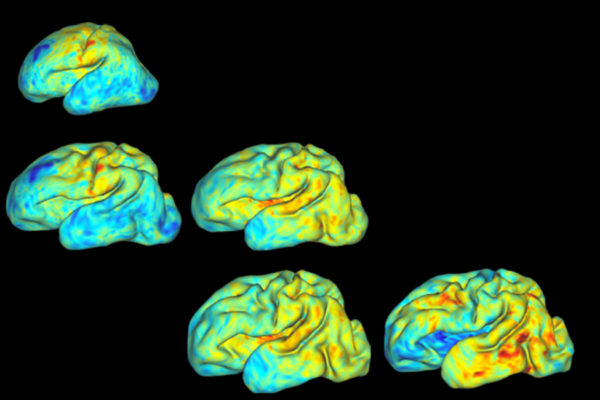
3-D mapping babies’ brains
Research from a collaborative team at Washington University in St. Louis tested a 3-D method that could lead to new diagnostic tools that will precisely measure the third-trimester growth and folding patterns of a baby’s brain. Their findings might help to sound an early alarm on developmental disorders in preemies that could affect them later in life.
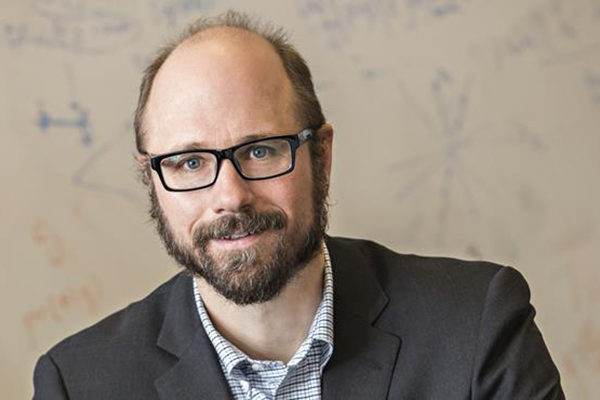
Anastasio to chair NIH biomedical imaging technology group
Mark Anastasio has been appointed chair of the National Institutes of Health (NIH) Biomedical Imaging Technology B Study Section (BMIT-B) for a two-year term beginning July 1. He is professor of biomedical engineering and of electrical and systems engineering at the School of Engineering & Applied Science at Washington University in St. Louis.
Academy of Science-St. Louis honors three researchers
Three researchers at Washington University in St. Louis, Raj Jain, David Kirk and Stuart Kornfeld, are being honored for outstanding contributions to science by the Academy of Science-St. Louis.
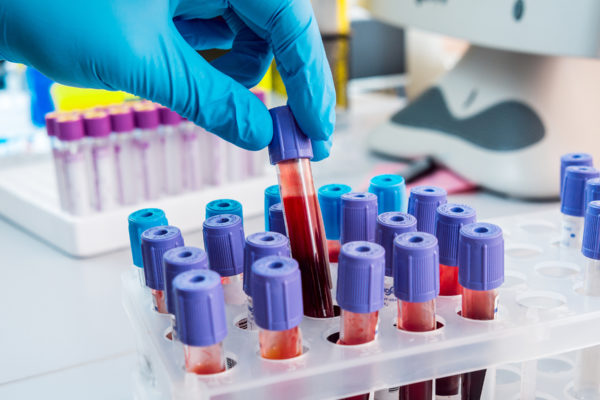
Simplifying samples
Using nanotechnology, a team of researchers at Washington University in St. Louis has eliminated the need for refrigeration for biomarkers used in medical diagnostic testing. The researchers recently gave their new tech a real-world test by sending it through the mail.

Fail Better with Grace Egbo
Facebook tells its team to “move fast and break things.” Washington University computer science student Grace Egbo did just that, crashing the company’s internal site during her summer internship.
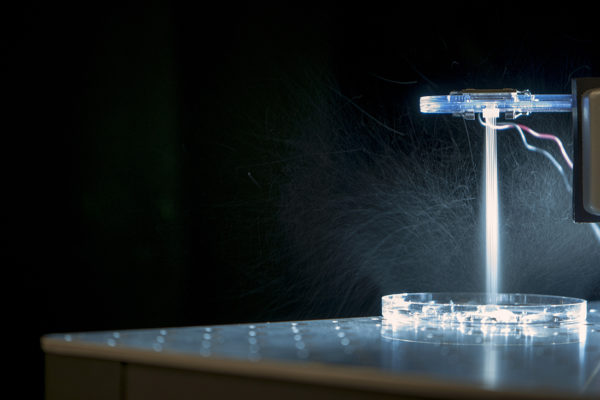
Developing enabling technology for emerging gene therapies
For years, researchers have attempted to harness the full potential of gene therapy, a technique that inserts genes into a patient’s cells to treat cancer and other diseases. However, inserting engineered DNA molecules into cells is difficult. A team of engineers at Washington University in St. Louis has developed a new method that could make the process easier.
View More Stories