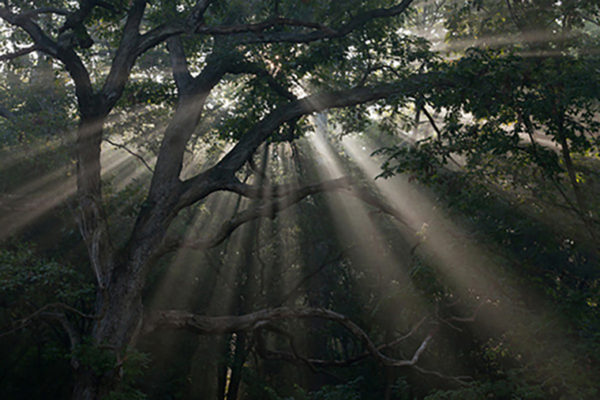
Tyson designated an Earth Observatory
A 60-acre plot in Washington University in St. Louis’ Tyson Research Center has been named a Forest Global Earth Observatory, or ForestGEO. The oak-hickory forest in the rolling foothills of the Ozarks joins a network of 51 long-term forest study sites in 23 countries, including eight others in the United States. Together, the forests, containing roughly 8,500 species and 4.5 million individual trees, comprise the largest, systematically studied network of forest-ecology plots in the world.

Beethoven, Tchaikovsky and Brahms Dec. 9
The hope was to repair a friendship. The result was a masterwork. On Dec. 9, the St. Louis Symphony’s Bjorn Ranheim and Shawn Weil will join the Washington University Symphony Orchestra for a performance of Johannes Brahms’ “Double Concerto in A for Violin and Cello.”
Listeners can distinguish voices of tall versus short people, study finds
A new study by researchers at Washington University in St. Louis, University of California, Los Angeles, and Indiana University found that listeners can accurately determine the relative heights of speakers just by listening to them talk. The key clue may be contained in a particular type of sound produced in the lower airways of the lungs, known as a subglottal resonance.
Washington University among top Fulbright producers
Washington University in St. Louis has been recognized as one of the top institutions in the nation for producing Fulbright students for 2013-14. Twelve Fulbright grants were awarded to current or recent WUSTL students for this academic year to fund various international educational exchange endeavors.
Handel’s Messiah Sunday, Dec. 15
It is perhaps the most beloved work of holiday music. The debut was almost prevented by Jonathan Swift. But on Dec. 15, the Department of Music in Arts & Sciences will present its annual sing-along of George Frideric Handel’s oratorio Messiah (1741) in Graham Chapel.
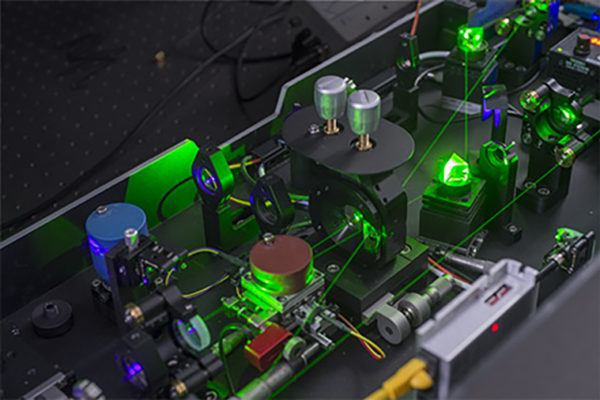
Scientists stitch up photosynthetic megacomplex
In Science, scientists at Washington
University in St. Louis report on a new technique that allowed them to extract a photosynthetic megacomplex consisting of a light antenna and two reaction centers from the membrane of a cyanobacterium. This is the first time an entire complex has been isolated and studied as a functioning whole.
Marc Copland, Gary Peacock and Joey Baron
As a young saxophonist in the early 1970s, Marc Copeland experimented with modern and electric harmonies but grew dissatisfied with his instrument. He quit the sax and, a decade later, re-emerged as a jazz pianist, renowned for his dexterous lyricism. On Friday, Dec. 6, Copland will join acclaimed bassist Gary Peacock and drummer Joey Baron for a performance in WUSTL’s 560 Music Center.
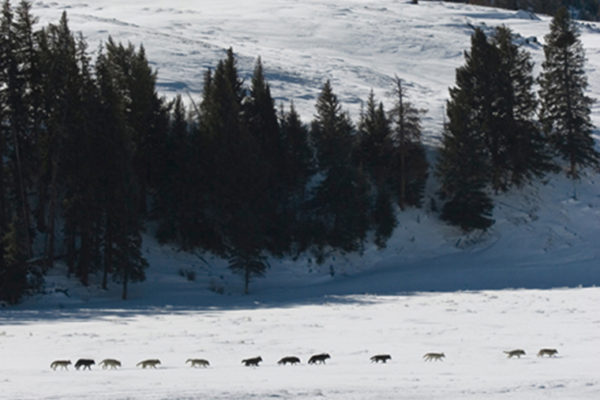
Environmental politics and climate change
Political scientist William Lowry has paid close attention to environmental issues for 25 years, marshaling what he learns each year and testing it in front of a class of critical students. He has honed his class “Environmental and Energy Issues” to the point where it is a white-water ride down a river of arguments and counterarguments that puts everything in context and lays out the
facts — but skips the lecturing and fearmongering that characterize this debate. There can be no better guide to the perplexed.
Washington University Dance Theatre Dec. 6-8
From tap to West African dance to contemporary ballet, WUSTL’s Performing Arts Department in Arts & Sciences will highlight seven new works by guest and faculty choreographers Dec. 6-8 as part of Shifting Limits, the 2013 Washington University Dance Theatre concert.
Joshua Aiken named Rhodes Scholar
Joshua Aiken, a senior at Washington University in St. Louis, was one of 32 Americans chosen Nov. 23 as a Rhodes Scholar. Considered among the world’s most prestigious academic awards, Rhodes Scholarships provide all expenses for two or three years of study at the University of Oxford in England. Aiken plans to study the experience of refugees and asylum seekers.
View More Stories