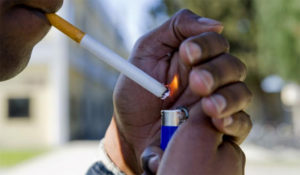
State actions to regulate retail sales of tobacco nearly doubled between 2012 and 2014, according to new research from the Brown School at Washington University in St. Louis, but much of the activity was directed at e-cigarettes, perhaps the least harmful tobacco product.
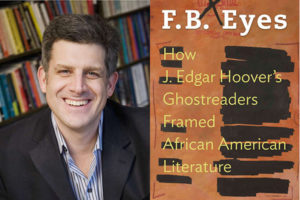
William J. Maxwell, professor of English and of African and African-American studies in Arts & Sciences, has won a 2016 American Book Award from the Before Columbus Foundation for “F.B. Eyes: How J. Edgar Hoover’s Ghostreaders Framed African American Literature” (2015).
In recognition of significant contributions to solving global humanitarian issues, the World Affairs Council of St. Louis has selected Washington University to receive the 2016 International Humanitarian of the Year Award. The university will be honored at a gala event to be held Thursday, Oct. 27, at the Chase Park Plaza hotel.
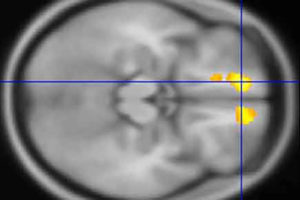
Using MRIs, researchers at the School of Medicine have identified areas in the brains of children with Tourette’s syndrome that appear markedly different from the same areas in the brains of children who don’t have the neuropsychiatric disorder. The findings were published online Oct. 25 in the journal Molecular Psychiatry.
The public radio program “Science Friday” has an episode airing at 1 p.m. Oct. 28 featuring three scientists with university ties: Christy Edwards, Bo Adu-Oppong and Michael Wysession.
Urban Cusp founder and former Washington Post columnist Rahiel Tesfamariam will kick off Africa Week at 7 p.m. Sunday, Oct. 30, in Hillman Hall. Sponsored by the African Students Association, Africa Week explores African education, activism, cuisine and commerce.
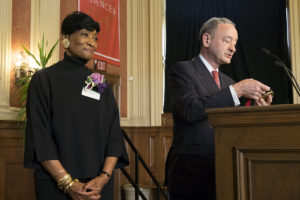
Carol Camp Yeakey, a professor of education, of urban studies, of international and area studies and of American culture studies, all in Arts & Sciences, has been named the Marshall S. Snow Professor in Arts & Sciences at Washington University in St. Louis.
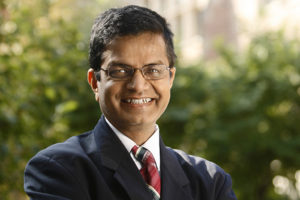
Raj Jain, the Barbara J. and Jerome R. Cox, Jr. Professor of Computer Science at the School of Engineering & Applied Science, is giving keynote addresses at four conferences in October and November.
The university will celebrate the grand opening of the Gary M. Sumers Recreation Center on Saturday, Oct. 29, with a day of activities and giveaways starting at 9 a.m.