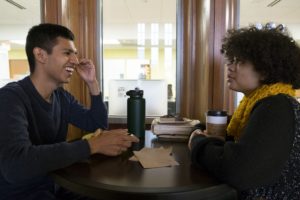
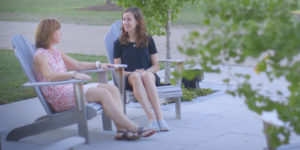
Deneb Stars is providing community and support to low-income students. It’s a segment of the population that often reports feeling left out on a campus where students wear Canada Goose parkas and vacation abroad during breaks.
Question: The McDonnell International Scholars Academy has 33 partner universities around the world. Which country has at least two universities in the academy?
A cross-disciplinary team from chemistry and physics in Arts & Sciences at Washington University in St. Louis has discovered both a framework to predict where neutrons will inhabit a nucleus and a way to predict the skin thickness of a nucleus.
The university’s Police and Parking Services departments, in partnership with Hartmann’s Towing, once again will sponsor free vehicle inspections for students, faculty and staff from noon-2:30 p.m. Saturday, Dec. 2, in the lower level of Millbrook Garage.
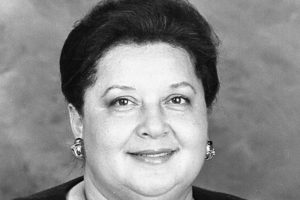
Adrienne Glore, who retired from Washington University in St. Louis in 2008 after 32 years as a beloved member of the student affairs staff, died Wednesday, Nov. 22, 2017, of complications related to vascular dementia at Sunrise on Clayton in Richmond Heights, Mo. She was 75.
Nearly 30 percent of U.S. college students drop out in their first year, on average. One segment of a campus population shown to experience a particularly difficult time fitting in: underrepresented minority students. Now, a new intervention program being implemented through the Brown School at Washington University in St. Louis aims to help minority students feel that they belong on campus.
The process to select the next chancellor of Washington University in St. Louis is in full swing, with the final two members added to the search committee, Susan B. McCollum and Empress Sanders. Listening sessions are underway on the Danforth Campus, with sessions scheduled on the Medical Campus in January.
Julie Margenthaler, MD, professor of surgery at Washington University School of Medicine in St. Louis and a breast surgeon at Siteman Cancer Center, has been named secretary-treasurer of the American Society of Breast Surgeons.
Since founding Student Organ Donation Advocates, senior Sara Miller has trained 50 volunteers and hosted 30 events including registration drives, conversations with bioethicists, and panels with medical researchers and with donors. But this fall, she welcomed a very special organ recipient — the schoolteacher who received her big sister’s liver.