Cindy Brantmeier, professor of applied linguistics and education, has designed a social reading program that employs online games to help adolescent refugees and immigrants. The results are promising — test scores have improved along with student confidence.
As part of its work on gun violence and human rights, the Whitney R. Harris World Law Institute at Washington University in St. Louis has submitted comments to the United Nations Human Rights Committee ahead of the group’s periodic review of the United States, urging stronger action on gun violence.
The Brown School’s Ross Hammond and Peter Hovmand are both part of the Lancet Commission on Obesity, which released its major new report Jan. 27. The main takeaway? Obesity, climate change and hunger are inextricably linked and must be fought as one challenge.
Researchers, including a postdoctoral fellow at Olin Business School, have studied where potential relationship problems exist between managers and employees who are close, and how to avoid such pitfalls.
There is no doubt that the cost of this shutdown has already exceeded the amount that President Trump requested for the border wall. And if my estimate is correct, it could have paid for the entire wall to be built and maintained for 40 years.
The Brown School has partnered with Preferred Family Healthcare in St. Louis to launch the Community Academic Partnership on Addiction (CAPA), a teaching, learning and research clinic aimed at addressing substance use disorder. The Brown School’s David Patterson Silver Wolf serves as CAPA’s chief research officer.
U.S. communities with higher smoking rates or lower excise taxes were less likely to adopt retail policies restricting tobacco sales, according to new research from the Brown School at Washington University in St. Louis.
Undergraduate tuition at Washington University in St. Louis will be $54,250 for the 2019-20 academic year — a $1,850 increase over the 2018-19 current academic tuition of $52,400, announced Amy B. Kweskin, vice chancellor for finance and chief financial officer. This year’s percentage increase of 3.5 percent matches that of the last four years and remains the university’s lowest in 51 years.
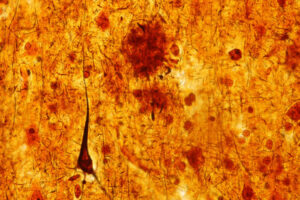
A study in mice and people from the School of Medicine shows that sleep deprivation causes tau levels to rise and tau tangles to spread through the brain, accelerating Alzheimer’s brain damage.