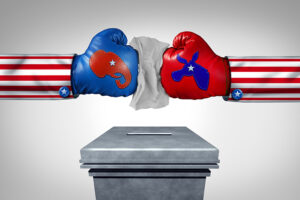
Even before they cast their votes, partisans of different stripes are poised to question the legitimacy of the election outcome, but for different reasons. According to political scientist Steven Smith at Washington University in St. Louis, findings of The American Social Survey, sponsored by the university’s Weidenbaum Center, indicate that the intensity of candidate and media attention about voting fraud threats — real or not — is influencing views of the legitimacy of the election outcome in November.
Carl Frieden, professor of biochemistry and molecular biophysics at the School of Medicine, received a one-year grant totaling $100,000 from the BrightFocus Foundation for his research titled “Understanding APOE.”
Washington University’s Deanna Barch was among 59 women psychologists working in academia who took an empirical approach to understanding gender inequities in their field. They find some promising data, but also much work to be done.
The McDonnell International Scholars Academy will hold a virtual global town hall Oct. 8. In preparation, it is hosting a photo contest, seeking images of how people are adapting and thriving and what gives them hope. WashU faculty, staff and students can submit entries by Tuesday, Sept. 15.
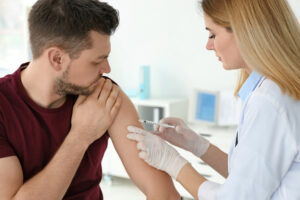
New Olin Business School research suggests that if consumers view a vaccine more like a curative to the epidemic, rather than as a preventative for the self, they will be more receptive toward it.
Neither reckoning nor healing will come from a drawn-out discussion behind closed doors. Healing starts with seeing these monuments as sites where both visible and invisible harms are actively perpetuated. If harm reduction and accountability are the goal, the statues should be removed immediately. This ought not be up for debate.
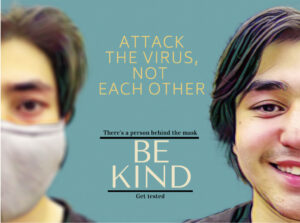
More than 1,200 students enrolled in “The Pandemic: Science and Society,” an online two-credit course featuring experts from across disciplines and across the country. The entire university may benefit from the lessons learned.
Robert W. Gereau IV, the Dr. Seymour and Rose T. Brown Professor and vice chair for research in the Department of Anesthesiology at the School of Medicine, has received the Landis Award for Outstanding Mentorship from the National Institute of Neurological Disorders and Stroke of the National Institutes of Health (NIH).
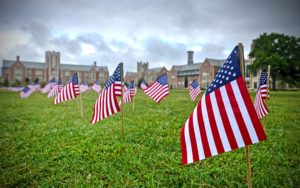
In honor of the 19th anniversary of 9/11, members of the Washington University in St. Louis College Republicans will plant 2,977 flags — one for each victim of the deadly attacks — on Mudd Field on the Danforth Campus. The university also will lower the American flag over Brookings Hall and ring the bells of Graham Chapel.
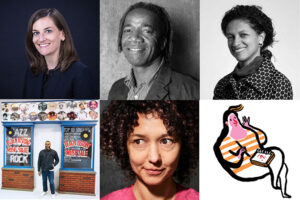
Nationally renowned artists, architects, designers and scholars will discuss their work as part of the Sam Fox School of Design & Visual Arts’ fall Public Lecture Series and the Mildred Lane Kemper Art Museum’s “In Conversation” series. Events begin Sept. 12 with art historian Natilee Harren, followed by MacArthur “Genius” Fellow Walter J. Hood, landscape designer for the International African American Museum Sept. 26. Combined, the series will feature 18 virtual presentations.