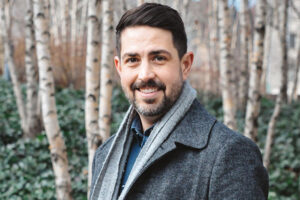
John Whitaker, a master’s candidate in landscape architecture and advanced architectural design, has won an Award of Excellence from the American Society of Landscape Architects.
Washington University in St. Louis’ Equity and Inclusion Council is moving forward with 42 newly appointed members, who will attend a kickoff meeting Oct. 7.
The Washington University in St. Louis Office of Information Security has completed its annual update of information security policies. Also, the office will be holding events during October, Cybersecurity Awareness Month, to keep the community informed.
Brendan Juba at the McKelvey School of Engineering at Washington University in St. Louis will take a close look at relationships and generalization in artificial intelligence with a National Science Foundation CAREER award.
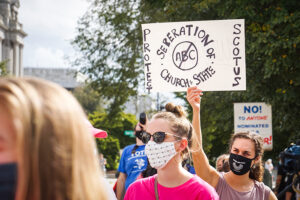
Questions about Amy Coney Barrett’s religious affiliation and beliefs have dominated public discussion since President Trump announced that she was his pick to fill the U.S. Supreme Court seat left vacant by Ruth Bader Ginsburg’s passing. While her Catholicism is considered controversial by some, should it impact her confirmation? A Washington University in St. Louis law professor weighs in.
Three Washington University researchers have received Young Investigator Grants from the Brain & Behavior Research Foundation. The foundation is committed to alleviating the suffering caused by mental illness by supporting research that will lead to advances and breakthroughs in scientific research. Read more about the work of Kirsten Gilbert Alberts and Emma Johnson, at the School of Medicine; and Keith Hengen, […]
Kirsten Gilbert Alberts and Emma Johnson at the School of Medicine and Keith Hengen in Arts & Sciences each received $70,000 Young Investigator grants from the Brain & Behavior Research Foundation, an organization that is committed to alleviating the suffering caused by mental illness by supporting research that will lead to advances and breakthroughs in scientific research.
A team of engineers and computer scientists at the McKelvey School of Engineering, along with multi-disciplinary collaborators at other institutions, will work over the next two years to prepare a proposal for one of the National Science Foundation’s National Artificial Intelligence (AI) Research Institutes.
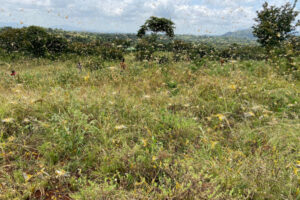
One locust is harmless, a swarm can be devastating. A new multi-institutional, multi-disciplinary project involving a researcher at Washington University in St. Louis aims to understand how swarms arise — and how to combat them.
Li Yang, professor of physics in Arts & Sciences, won a $421,080 grant from the U.S. Air Force Office of Scientific Research in support of a project titled “Nonlinear Infrared Light-Matter Interactions of Topological Quantum Materials.”