Washington University’s Global Health Center selected five WUSTL students for its inaugural summer research program, which paired students with faculty mentors to explore issues such as malnutrition, maternal health and access to health care. Pictured is program participant Laura Bliss, a second-year medical student.
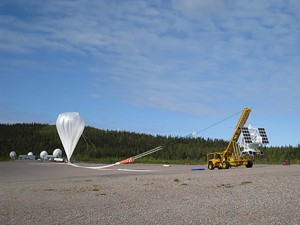
In a few days, a balloon-borne telescope sensitive to the polarization of high-energy “hard” X rays will ascend to the edge of the atmosphere above Fort Sumner, N.M., to stare fixedly at black holes and other exotic astronomical objects. It will be carried aloft by a stratospheric balloon that will expand to a sphere large enough to hold a 747 jetliner the float height of 120,000 feet, three times the height at which commercial aircraft fly and on the edge of Earth’s atmosphere. Launching the balloon is not child’s play.
The updated Law Café in Anheuser-Busch Hall has opened for business. The renovated space, operated by Bon Appétit, is the only dining area on campus to feature Salad By Design and one of only two locations with a carvery. The Law Café also features pizza, soups, grab-and-go items, pastries and Kaldi’s coffee and espresso drinks.
Washington University in St. Louis Emergency Management Services has launched a new easy-to-use, mobile-friendly website. Features include a color-coded bar that changes from green to red in case of emergency and advisories from the National Weather Service.
Jason Q. Purnell, PhD, assistant professor at the Brown School, was a recipient of the Urban League Young Professionals of Metropolitan St. Louis’ 2014 Distinguished Young Professionals Award, in the area of Healthy and Quality of Life Empowerment.
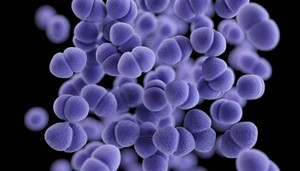
Scientists at Washington University in St. Louis have obtained the first experimental evidence that there are at least two fail-safe points in the bacterial cell cycle. If the fail-safes are activated, the cell is forced to exit the cell cycle forever. It then enters a zombie-like state and is unable to reproduce
even under the most favorable of conditions. Drugs that trigger the fail-safes are already under development.
The commute is about to get a little easier for employees and patients heading to Washington University Medical Center. After more than a year of construction activity, the improved Interstate 64/Highway 40 interchange at Tower Grove Avenue is scheduled to open the afternoon of Friday, Aug. 29.
This summer, 14 students — seven from the Master of Public Health program, five from the Master of Social Work program and two dual-degree students — joined Lora Iannotti, PhD, on a trip to Haiti. The goal: Give students firsthand experience in issues related to global health, including: health policy, epidemiology, biostatistics and program planning.
Since the shooting of Michael Brown, the eyes of the world have turned to St. Louis. Over the last several weeks, associate professor Bob Hansman — one of the area’s most prominent community activists — has quietly ushered hundreds of students through the neighborhoods of north St. Louis, chronicling the racial, social and urban histories that have shaped conditions on the ground.