Thomas and Jennifer Miller Hillman, philanthropists and Washington University alumni, are helping the Brown School create maximum social impact with a major gift to support its programs. In honor of the gift for the Brown School expansion, the new building on the Danforth Campus will be named Hillman Hall.
Staff members from Washington University Police Department, Bear Patrol and Parking & Transportation Services, in partnership with Hartmann’s Car Care & Towing, performed more than 100 auto safety checks in Millbrook Parking Garage Dec. 6 for students and staff in advance of winter break.
Ron Cytron, PhD, professor of computer science and engineering in the School of Engineering & Applied Science at Washington University in St. Louis, has been awarded a 2014 Emerson Excellence in Teaching Award.
This year’s holiday gingerbread house was on display during a reception following the December degree candidate recognition ceremony Dec. 6. A replica of Anheuser-Busch Hall, the gingerbread house is now on display in Anheuser-Busch Hall’s atrium until Dec. 15.
Beginning Jan. 5, visitor parking rates at Washington University School of Medicine’s Metro and Clayton garages will change to align with garage visitor parking rates of the School of Medicine’s hospital partners.
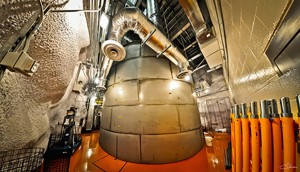
An astrophysicist at Washington University in St. Louis is among the team hunting for an elusive particle called a WIMP, that may be the fundamental particle of dark matter. To catch this notoriously wily particle they have built a detector consisting of a large vat of xenon in a deep chamber of a played-out gold mine in the Black Hills of South Dakota.
In the 1920s and ’30s, African-American preachers spread the word to a mass audience one phonograph record at a time. A new book by Lerone Martin, PhD, of the Danforth Center on Religion and Politics at Washington University in St. Louis, chronicles a forgotten era when sermons by African-American clergy on vinyl (and wax) outsold popular performers such as Bessie Smith and Ma Rainey.
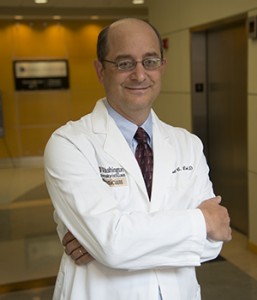
New research by Daniel Link, MD, and colleagues at The Genome Institute at Washington University has revealed that mutations that accumulate randomly as a person ages can play a role in a fatal form of leukemia that develops after treatment for another cancer.
Eighty-one staff members in the Facilities Management Department at Washington University School of Medicine recently earned the title of Facility Management Professional (FMP) from the International Facility Management Association. The department set a national record by having so many employees earn this title in less than four months. Professionals who become FMPs complete a series of comprehensive exams covering four areas: operations and maintenance, project management, finance and business, and leadership and strategy.