Eight alumni from a variety of backgrounds will receive Alumni Achievement Awards from the School of Engineering & Applied Science of Washington University in St. Louis on Thursday, April 23.
For 50 years, the Women’s Society of Washington University has made a difference in the Washington University in St. Louis community through its dedication to supporting students and strengthening the university’s regional ties.
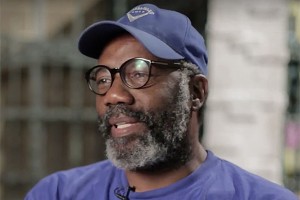
In 1976, as a business major at Washington University in St. Louis, Ron Himes began staging theatrical performances. Thirty-eight seasons later, Himes remains founder and producing director for The Black Rep, one of the nation’s largest and most respected African-American theater companies.
Washington University in St. Louis graduate student Andrea Karl found herself thrust into the national spotlight this month at the St. Louis GO! Marathon when an imposter at the finish line denied Karl her first-place accolades. She got to recreate the finish at Busch Stadium. Karl is working towards a PhD in molecular genetics and genomics in the Division of Biology & Biomedical Sciences (DBBS) at the School of Medicine. DBBS is in the Graduate School of Arts & Sciences.
Gretchen Meyer, PhD, an instructor in physical therapy and in neurology at Washington University School of Medicine in St. Louis, has received a $35,000 grant from the university’s Musculoskeletal Research Center for research titled “Promoting Rotator-cuff Muscle Regeneration With Paracrine Adipose Signaling.”
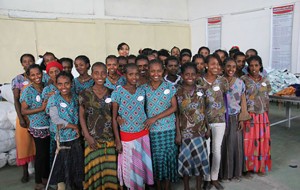
While in Ethiopia as a Fulbright scholar, L. Lewis Wall, MD, DPhil, met a woman who is trying to change the experience of adolescent girls in rural Ethiopia by providing them with reusable sanitary pads and education about menstruation. Wall and his wife, Helen, decided they had to do something to support the mission.
Arts & Sciences at Washington University in St. Louis recognized five alumni during its 17th annual Arts & Sciences Distinguished Alumni Awards ceremony, held March 19 at The Ritz-Carlton, St. Louis. Barbara A. Schaal, PhD, dean of the faculty of Arts & Sciences and the Mary-Dell Chilton Distinguished Professor, hosted the awards dinner.
George E. Miles, MD, PhD, a clinical fellow in molecular genetic pathology, in July will become the first Genentech Research Fellow in the Department of Pathology and Immunology at Washington University School of Medicine in St. Louis.
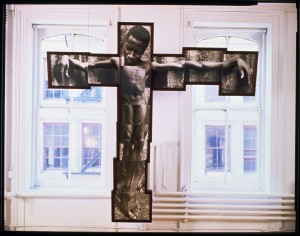
“Rotation 1: Contemporary Art from the Peter Norton Gift” opens Friday, May 1 at the Mildred Lane Kemper Art Museum. The exhibition will offer St. Louis museum-goers their first chance to view highlights from a major recent gift by the renowned arts philanthropist and software entrepreneur.
Scientists have long suspected that respiratory viruses play a critical role in the development of chronic lung diseases such as asthma and chronic obstructive pulmonary disease (COPD). Studying mouse and cell models of this process, researchers now have shown how immune cells dispatched to the lung to destroy a respiratory virus can fail to disperse after their job is done, setting off a chain of inflammatory events that leads to long-term lung problems.