Teresa Deshields, PhD, manager of Siteman Counseling Service at Siteman Cancer Center at Barnes-Jewish Hospital and Washington University School of Medicine, has been chosen as a 2015 fellow by the American Psychosocial Oncology Society.
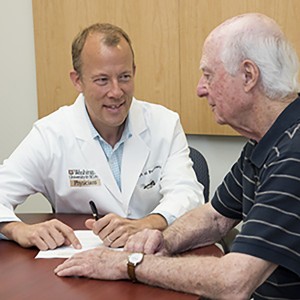
More than half of older adults with clinical depression don’t get better when treated with an antidepressant. But results from a multicenter clinical trial that included Washington University School of Medicine in St. Louis indicates that adding a second drug — an antipsychotic medication — to the treatment regimen helps many of those patients.
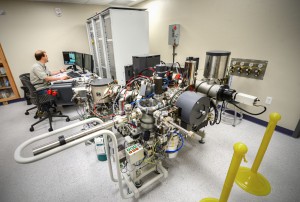
The U.S. Department of Energy has awarded David Fike, PhD, associate professor of earth and planetary sciences, $2.4 million to adapt a powerful chemical microscope called the 7F-GEO SIMS for biological samples. The updated instrument’s ability to map the chemistry inside cells will boost research on microbes that are promising candidates for biofuel or bioenergy production.
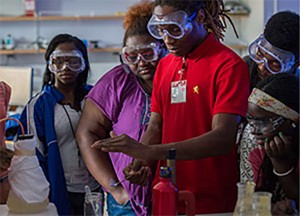
AT&T, through its signature education initiative AT&T Aspire, has committed $400,000 to the College Prep Program at Washington University in St. Louis. The program helps low-income students from across the St. Louis region connect with other talented students and prepare for success in college.
Matthew Mutch, MD, a nationally known clinician and educator in the laparoscopic treatment of colorectal cancer, has been named chief of Colon and Rectal Surgery in the Department of Surgery at Washington University School of Medicine in St. Louis.
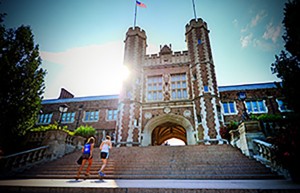
A task force created last fall at Washington University in St. Louis to study issues of sexual assault and relationship violence has completed its work and is recommending a number of measures that aim to create a supportive, respectful campus environment where sexual assault is a rare occurrence.
While party politics have put House Speaker John Boehner (R-Ohio) in the hot seat in recent months, his hasty resignation from Congress this morning was unexpected, suggests Steven S. Smith, PhD, a nationally recognized expert on congressional politics at Washington University in St. Louis.
While Pope Francis’ whirlwind tour of the United States might seem like a politicized poke-in-the-eye to some conservative American Catholics, his itinerary and social justice talking points closely mirror core Catholic beliefs detailed in church scripture since Matthew wrote his gospel, suggests a historian of Christianity at Washington University in St. Louis.
Todd Decker, PhD, chair of music in Arts & Sciences at Washington University in St. Louis, spoke this month about musical film star Fred Astaire at a study day titled “Fred Astaire and Ginger Rogers: A London Celebration” at the Victoria and Albert Museum.
Cancers have many strategies for avoiding attacks from the immune system. But the more scientists are able to understand about them, the more effectively they will be able to use the immune system to fight cancer. To that end, researchers at Washington University School of Medicine in St. Louis have identified a new strategy.