John A. Wright, PhD, author and historian, will speak at the 20th annual Homer G. Phillips Public Health Lecture Series at Washington University School of Medicine in St. Louis on Oct. 23. The title of his talk is “Homer G. Phillips and the Ville: Celebrating the Legacy.”
The American Society of Anesthesiologists has named Evan D. Kharasch, MD, PhD, of the School of Medicine, the new editor-in-chief of the journal Anesthesiology. Kharasch will assume the role of editor-in-chief-elect on Jan. 1, 2016, and then officially take on full editorial responsibility July 1.
The Experimental Psychology Division (Division 3) of the American Psychological Association (APA) has awarded its 2015 Lifetime Achievement Award to Larry L. Jacoby, PhD, an internationally recognized scholar of human memory and a professor of psychology in Arts & Sciences at Washington University in St. Louis.
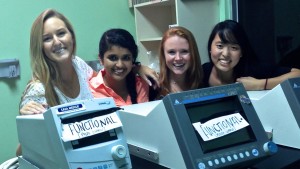
This past summer, a group of students from Washington University in St. Louis traveled to Guatemala to repair medical equipment at the nation’s largest public hospital. The trip was part of the Washington University Guatemala Initiative, supported by the Gephardt Institute for Civic and Community Engagement.
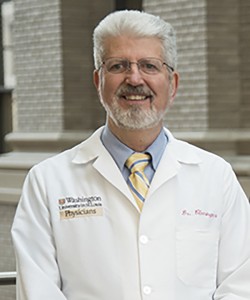
Using advanced brain imaging, researchers have matched certain behavioral symptoms of schizophrenia to features of the brain’s anatomy. The findings, from a research team led by the School of Medicine’s C. Robert Cloninger, MD, PhD, (shown) and Igor Zwir, PhD, could be a step toward improving diagnosis and treatment of schizophrenia.
Beth Kozel, MD, PhD, an assistant professor of pediatrics in the Division of Genetics and Genomic Medicine at the School of Medicine, has been named a 2015 National Institutes of Health (NIH) Lasker Clinical Research Scholar.
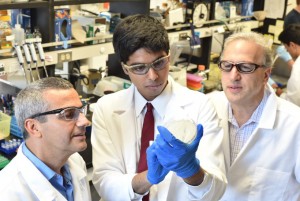
Three scientists at Washington University School of Medicine in St. Louis and Siteman Cancer Center each will receive $900,000 in funding – $2.7 million total – over two years for their innovative approaches to fighting leukemia and other types of cancer.
Robert J. Iversen, a third-year student in the School of Law at Washington University in St. Louis, died recently. Iversen was 39. An accomplished and involved law student, Iversen was expected to earn a juris doctoris in May 2016.
The Department of Classics in Arts & Sciences will host a memorial for Kevin Herbert, professor emeritus of classics, at 5 p.m. Friday, Oct. 23, in the Ballroom of Washington University’s 560 Music Center.