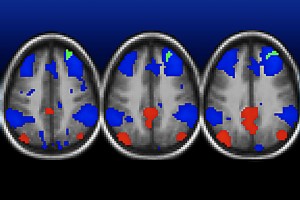
New research from Washington University in St. Louis has identified a novel learning and memory brain network that processes incoming information based on whether it’s something we’ve experienced previously or is deemed to be altogether new and unknown, helping us recognize, for instance, whether the face before us is that of a familiar friend or a complete stranger.
Researchers at Washington University School of Medicine in St. Louis have received a $7 million grant from the Bill & Melinda Gates Foundation aimed at eliminating river blindness and elephantiasis, two neglected tropical diseases that annually sicken millions.
This fall, the Mildred Lane Kemper Art Museum at Washington University in St. Louis presents “World War I: War of Images, Images of War.” Drawn primarily from the Getty Research Institute in Los Angeles, where it debuted in fall 2014, the exhibition features more than 150 objects that together chart a chronological path from exuberant outbreak through years of grinding combat and into the long, unsettled aftermath.
In 2014, so called “Right to Try” laws, which gave terminally ill patients access to investigational medications, were enacted in five states. More state legislatures are now considering such laws. While time will tell whether these investigational drugs have any significant impact on quality of life or longevity, the legislative debate over such laws must be more informed than it has been, argues Rebecca Dresser, JD, expert in biomedical ethics and law at Washington University in St. Louis.
New school. New professors. New friends. Incoming freshmen already have much to consider without worrying about global climate change and public health challenges. Still, there are easy and important ways to reduce our collective impact at college, said Phil Valko, assistant vice chancellor for sustainability at Washington University in St. Louis.
A team of Washington University students on the Medical Campus recently won top honors in the Neuro Startup Challenge, a biotech startup competition designed to commercialize promising brain-related discoveries of scientists at the National Institutes of Health (NIH).The team developed a business plan to commercialize a test for patients with multiple sclerosis.
Erika Pearce, PhD, associate professor of pathology and immunology at Washington University School of Medicine in St. Louis, has received a four-year, $1.26 million grant from the National Cancer Institute of the National Institutes of Health (NIH) and, separately, a $500,000 grant for metabolism research.
Scientists have identified a pathway that leads to the formation of atypical blood vessels that can cause blindness in people with age-related macular degeneration. The research, at Washington University School of Medicine in St. Louis, sheds light on one of the leading causes of blindness in industrialized countries and offers potential targets for treating the disease.
Olin Business School at Washington University in St. Louis is hosting seven of the nation’s top finance scholars for an intensive, four-day program geared for doctoral business students and university faculty. More than 130 participants from across the nation and around the world will gather on the Danforth Campus Aug. 12-15 for a program called “Summer School: Financial Intermediation and Contracting,” a chance to learn from some of the brightest and best-regarded minds in the field.