
Newly launched James Merrill Digital Archive brings poet’s creative process into view
A newly launched digital archive offers a fresh look at the poetry and writing process of Pulitzer Prize winner James Merrill.
Flu vaccinations available to students, employees
Beginning Tuesday, Oct. 1, seasonal flu vaccines will be available to School of Medicine employees and students. Vaccines also will be available to students and some employees on the Danforth Campus. New this year is that the vaccine is required for all students and employees who engage in patient care or work in buildings where patient care is provided or clinical research occurs. Shown is registered nurse Melanie Dill administering a flu shot.
Engineer’s $3.5 million grant aims at improving survival of cancer patients
A technology proposed by Lihong Wang, PhD, professor of engineering, may hold the key to detecting tumor cell circulation, potentially enabling earlier therapeutic interventions and curative surgical treatment and improving survival of patients with cancer.
POSTPONED: Energy Secretary Moniz to speak on Obama’s climate action plan Oct. 4
Ernest Moniz, PhD, U.S. Secretary of Energy, will speak
about President Barack Obama’s Climate Action Plan, at 2:30 pm on Oct. 4
in Laboratory Sciences Building, Room 300. Moniz’s talk is the
52nd annual Joseph W. Kennedy Memorial Lecture sponsored by the
Department of Chemistry in Arts & Sciences. A reception will follow.
School of Medicine celebrates launch of Taylor Family Institute
The Department of Psychiatry is hosting a celebration Tuesday, Oct. 1, to mark the official launch of the Taylor Family Institute for Innovative Psychiatric Research. The institute, dedicated to advancing the science underlying the diagnosis and treatment of psychiatric illnesses, was created with a $20 million gift from Andy and Barbara Taylor and the Crawford Taylor Foundation. Pictured are institute investigators.
‘Evo-devo’ trailblazer Brian Hall to give Assembly Series lecture
Scientific discoveries in understanding how body structures change and advance over time are relatively recent and are the result of scientific trailblazers working in the field of evolutionary developmental biology (evo-devo).
One of those pioneers, Brian K. Hall, will visit Washington University and give an Assembly Series lecture at 4 p.m. Monday, October 7 in McDonnell Hall Room 162.
A new era for the Brown School
The Brown School community celebrated its expansion Sept. 24 with a ceremonial groundbreaking for an innovative new building of approximately 105,000-square feet set to open in the summer of 2015. When completed, the new facility will double the Brown School’s footprint on the Danforth Campus and bring the school, as Lawlor said in his remarks, into a “new era.”
Assembly Series: ‘ObamaCare’ expert Jonathan Gruber to discuss why health-care reform is needed
Just a few days after the Affordable Care Act’s mandatory insurance component becomes law, the principal architect of the Massachusetts health care system and chief advisor to President Obama’s plan will be on campus to explain how it works and how it will benefit society.
MIT economist and renowned health care expert Jonathan Gruber will deliver an Assembly Series lecture on “Health Care Reform: What It Is, Why It’s Necessary, How It Works” at 6 p.m. Friday, October 4 in Brown Hall Room 100 on the Washington University Danforth Campus.
Procedure to open blocked carotid arteries tested
Doctors at the School of Medicine are investigating a new minimally invasive procedure to open blocked carotid arteries in patients whose poor health or advanced age makes the traditional open surgery too risky. Pictured are carotid arteries, which feed blood to the brain.
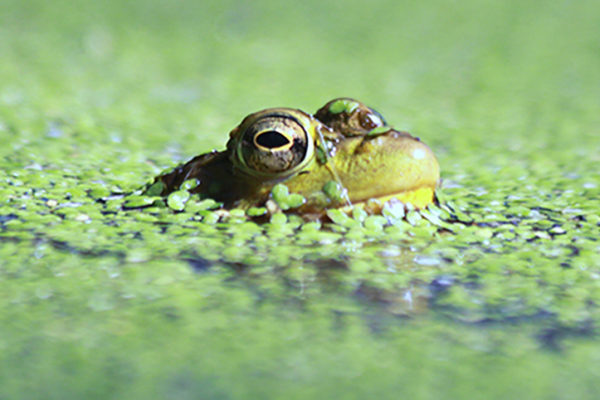
Missouri ponds provide clue to killer frog disease
In Missouri, about a third of the ponds are infected with chytrid, the notorious skin fungus that has sickened and killed amphibians in other parts of the world. Why only a third, Washington University in St. Louis scientists wondered? A comprehensive study of the the ponds suggests there are hidden constraints on the survival of the fungus. One possibility is that invertebrates present in some ponds but not others allow the fungus to persist by acting as alternative hosts or reservoirs.
View More Stories