
Bear Cub Challenge faculty awardees announced
Following a four-month rigorous training and selection process among 46 exceptional applications to the Bear Cub Challenge at Washington University in St. Louis, grants have been awarded to the top applicants.
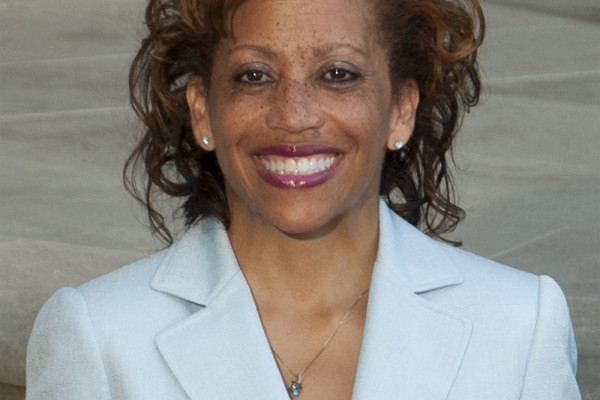
Lori S. White appointed vice chancellor for students
Lori S. White, PhD, vice president for student affairs at Southern Methodist University, has been named vice chancellor for students at Washington University in St. Louis. The appointment is effective July 1, according to Chancellor Mark S. Wrighton. White succeeds Sharon Stahl, PhD, who announced last year that she would retire at the end of the 2014-15 academic year.
Research as art
An inaugural exhibit of images by scientists, titled “Research as Art,” held April 3, included eerie landscapes created by vortices in superfluids, smeared false-color data from satellite-borne instruments, three-dimensional images of grains that exploded out of supernovas and many more enigmatic and colorful images.
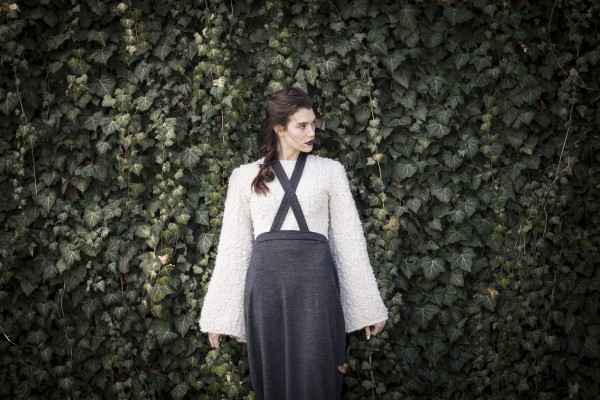
Distinctive points of view
The Sam Fox School of Design & Visual Arts will present its 86th Annual Fashion Design Show at 3 p.m. Sunday, April 26. The fully choreographed, Paris-style extravaganza, which takes place in Union Station, will features dozens of models wearing scores of outfits by 27 sophomore, junior and senior designers.

New Ebola study points to potential drug target
Opening the door for potential treatments for the deadly Ebola virus, scientists at Washington University and elsewhere have found that a way to kill the virus by interfering with its replication.
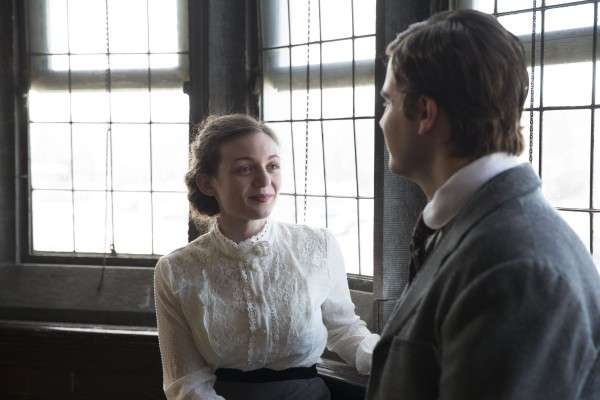
The ghosts of old technology
The method is strange at first, disconcerting, but new rules and rhythms are quickly internalized. Soon the machines seem almost to speak. In “Telegraph,” recent alumnus Will Jacobs — winner of the 2014 A.E. Hotchner Playwriting Competition at Washington University in St. Louis — explores the wonder and shortcomings of communication technology.
WashU junior Kevin Hays to attempt Rubik’s Cube world record at Thurtene Carnival
Kevin Hays, a junior at Washington University in St. Louis and a Rubik’s Cube champion, will attempt to break a Guinness World Record at 4 p.m. Sunday, April 19, at the annual Thurtene Carnival, the nation’s oldest and largest student-run carnival. Hays, from the bottom of a see-through dunk tank, will attempt to break the world record for most Rubik’s Cubes solved underwater. Thurtene Carnival runs from April 17-19 on Brookings Drive on the Danforth Campus.
Report gives guidance to FDA on tobacco policy and public health
The Brown School’s Douglas A. Luke, PhD, professor and director of the Center for Public Health Systems Science at Washington University in St. Louis, was on an Institute of Medicine committee which recently released guidelines to the U.S. Food and Drug Administration on using
agent-based models to improve the effect of tobacco control
policy on public health.
Medical Campus students perform 10th annual musical April 16-18
Students on the Medical Campus will present their 10th annual musical, “How to Succeed in Business Without Really Trying,” at 8 p.m April 16, 17 and 18 in the Olin Residence Hall Gym on the Medical Campus.
McCaskill holds roundtable discussion on aging at Washington University
As part of her series of Senior Listening Sessions across Missouri, Sen. Claire McCaskill held a roundtable discussion with experts on retirement security, elder justice and healthy aging March 31 at the Brown School’s Goldfarb Hall. Among the roundtable participants were seven from Washington University in St. Louis.
View More Stories