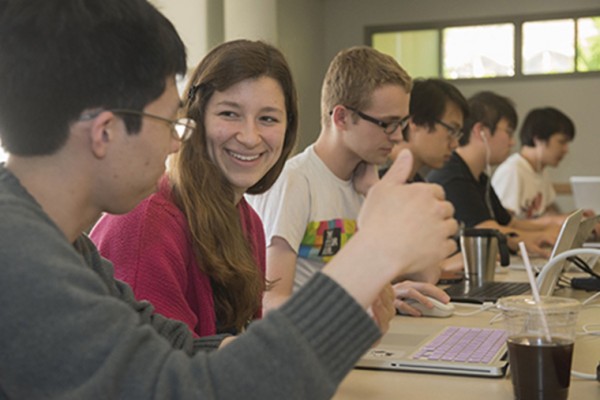
Massively parallel biology students
The list of authors for an article on the comparative genomics of a fruit fly chromosome, published online May 11 by the journal G3, includes 940 undergraduates from 63 institutions. It is the result of an effort, coordinated through Washington University in St. Louis, to provide many more students with a hands-on research experience than has traditionally been possible.

New technology may reduce deadly complication of bone marrow transplants
Researchers led by John F. DiPersio, MD, PhD, at the School of Medicine have designed a way to mitigate graft-versus-host disease, a common and often life-threatening complication of bone marrow transplants that are used to treat leukemia and other blood cancers. The method also employs a molecular imaging tool to help doctors identify patients most likely to develop this dangerous condition.
IdealTap takes $25,000 prize in 2015 Discovery Competition
IdealTap, a medical device that would make spinal taps easier and more efficient for the patient and physician, has won $25,000 in cash in the 2015 Discovery Competition in the School of Engineering & Applied Science.
Trial to study whether statins reduce strokes, heart attacks in HIV patients
The Washington University AIDS Clinical Trials Unit is the first in the nation to open a clinical trial evaluating whether statins reduce heart attacks and strokes in patients with human immunodeficiency virus (HIV).
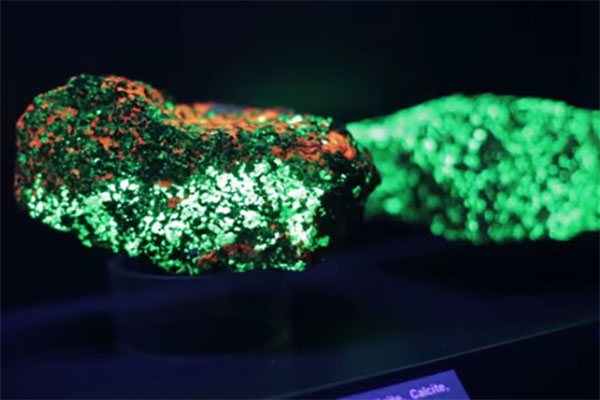
Rocks that glow in the dark
There’s a small room in Rudolph Hall that most students walk right past
without noticing. But when anyone finds it, they usually insist all
their friends come and look as well. It’s one of those special things about the university no student ever forgets, and this is the story of how it came to be there.

Coming soon: First encounter with a new class of worlds
After an epic journey across the breadth of the solar system, the New
Horizons spacecraft is finally nearing its destination: the Pluto system, a staggering three billion miles from Earth. William McKinnon, a planetary scientist at Washington University in St. Louis, explains that our understanding of Pluto has been transformed in the nearly 10 years the probe has been en route to its target.
Hague releases declaration on intellectual privacy based on work of law’s Richards
More than 50 international organizations and global experts signed The Hague Declaration on Knowledge Discovery in the Digital Age May 6. The declaration calls for immediate changes to intellectual property (IP) law and the removal of other barriers preventing larger and more equal access to data. The document is based in part on the work of Neil Richards, JD, professor of law. Richards is a noted expert on data ethics and intellectual freedom and has published widely on issues related to privacy in the digital age.
I-CARES announces 2015 funded research projects
The International Center for Advanced Renewable Energy and Sustainability (I-CARES) has announced the winners from its 2015 call for proposals. This year, the center awarded funds to 10 projects involving nearly 30 Washington University faculty from four schools.
Carrot or stick? Punishments may guide behavior more effectively than rewards
When it comes to rewards and punishments, which is more effective — the carrot or the stick? Researchers at Washington University in St. Louis have devised a simple experiment to test the effects of rewards and punishments on behavior and have found that punishments seem to be more effective at influencing behavior.
Teaching assistants recognized for excellence
William F. Tate, PhD, dean of the Graduate School of Arts & Sciences, recognized outstanding performance by graduate teaching assistants during the annual Dean’s Award for Teaching Excellence ceremony, held April 23 in the Women’s Building Formal Lounge.
View More Stories