
Gephardt hosts ‘New in the Lou: What Does Ferguson Mean to Me?’
The Gephardt Institute for Civic and Community Engagement invites new members of the Washington University in St. Louis community to discuss Ferguson’s impact on the region at “New in the Lou: What Does Ferguson Mean to Me?” a series of moderated panel discussions, held at the Stix House, 6470 Forsyth Blvd.

Chua, Danforth to discuss political tribalism Sept. 12
Best-selling author Amy Chua and former U.S. Sen. John Danforth will come together for a public conversation, “Overcoming Political Tribalism and Recovering Our American Democracy,” at 7 p.m. Thursday, Sept. 12, in Graham Chapel at Washington University in St. Louis.

Helping autonomous vehicles, robots make better plans
A researcher at the McKelvey School of Engineering is working to improve the way autonomous vehicles make decisions, and the way they relay that information.

Environmental racism in St. Louis
Black St. Louisans are exposed to considerably greater environmental risks than white residents, contributing to stark racial disparities regarding health, economic, and quality of life burdens, finds a new report prepared by the Interdisciplinary Environmental Clinic (IEC) at Washington University School of Law.

‘it comes and it goes’
Artist Anne Schaefer, a 2001 alumna of the Sam Fox School of Design & Visual Arts, discusses “it comes and it goes,” a new 12-panel mural she recently installed in the school’s Anabeth and John Weil Hall.
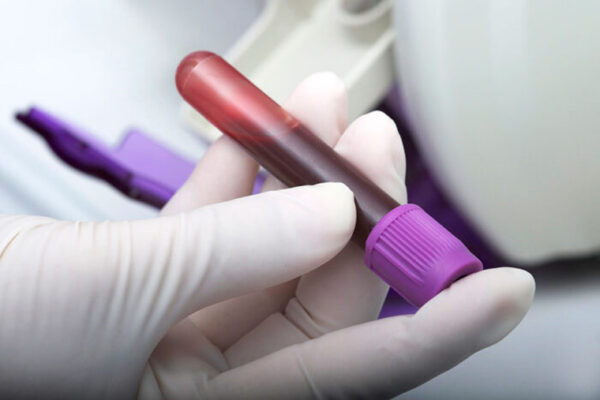
Zika diagnostic test granted market authorization by FDA
A test for signs of Zika infection has been granted market authorization by the Food and Drug Administration. The test is based in part on an antibody developed by researchers at the School of Medicine.

Monitoring bridge safety with wireless sensors
Researchers from Washington University in St. Louis and Michigan State University are testing innovative sensors on Michigan’s Mackinac Bridge that are powered by traffic vibrations and could detect bridge failures before they happen.

Corporate America endorses responsibility, values
CEOs belonging to the Business Roundtable publicly committed to corporate responsibility to society as a whole, “a huge statement from one of the most influential groups in American business,” says a Washington University in St. Louis expert in values-based business.
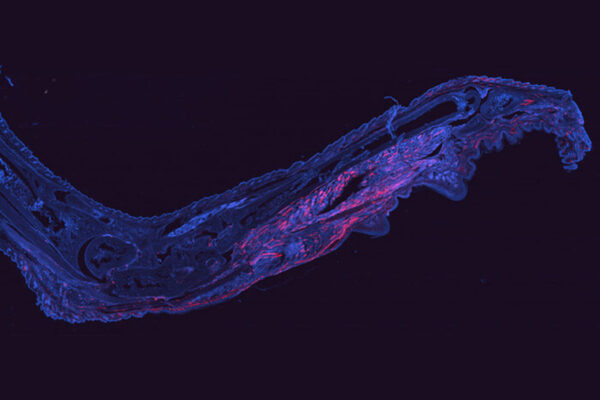
Arthritis-causing virus hides in body for months after infection
Researchers at the School of Medicine have developed a way to fluorescently tag cells infected with chikungunya virus. The technique opens up new avenues to study how the virus persists in the body and potentially could lead to a treatment.
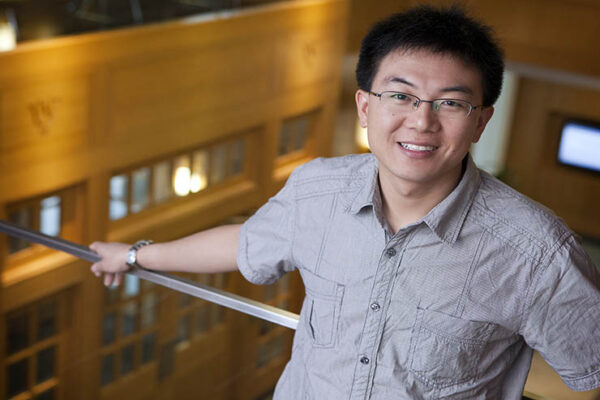
Zhang wins $2 million NIH grant to study metabolite heterogeneity in bacteria
Fuzhong Zhang, an expert in synthetic biology at the McKelvey School of Engineering, is investigating how genetically identical cells manage to act so differently. The answer may have implications for antibiotic persistence.
View More Stories