
Inhibiting fatty acids in immune cells decreases atherosclerosis risk
Scientists at Washington University School of Medicine in St. Louis have found a way to significantly reduce atherosclerosis in mice that does not involve lowering cholesterol levels or eliminating other obesity-related problems. Atherosclerosis is the process through which fatty substances, such as cholesterol and cellular waste products accumulate in the lining of arteries. The research team inhibited atherosclerosis in the mice by interfering with production of a substance called fatty acid synthase, an enzyme that converts dietary sugars into fatty acids in the liver.
Beware the smell of bitter almonds
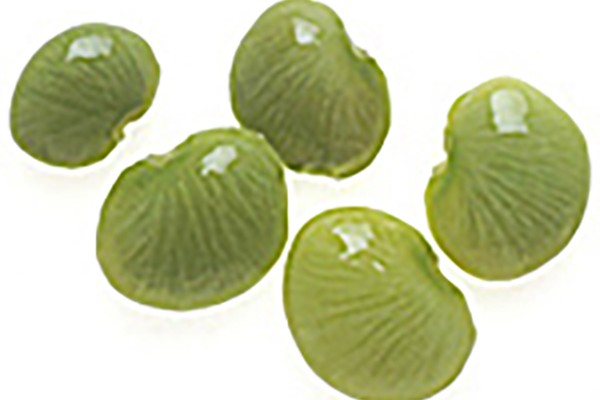
Many food plants contain cyanogenic glycosides that can release cyanide when the food is eaten. What’s more, a greater proportion of food plants than plants in general are cyanogenic. WUSTL researcher Kenneth M. Olsen, PhD, offers an explanation of this toxic puzzle.
A sobering demonstration
Occupational therapy students learn the powerful effect of alcohol on an egg to demonstrate fetal alcohol spectrum disorder.
Law faculty Fulbright awards offer many firsts for WUSTL
Four School of Law faculty members have received Fulbright awards for the 2010-11 school year. They are Dorsey D. Ellis Jr., JD; ; David Law, JD, PhD; Jo Ellen Lewis, JD; and Leila N. Sadat, JD.
Gabel awarded Guggenheim Fellowship
Matthew J. Gabel, PhD, professor of political science in Arts & Sciences, has been awarded a fellowship from the John Simon Guggenheim Memorial Foundation. The award will support his work on judicial decision-making in the European Union.
Stretch departmental funds — hire a work-study student
Student Financial Services can help departments locate and hire part-time student workers for the 2010-11 academic year — and, at the same time, help departments stretch their budgets a bit further. For 2010-11, approximately 1,000 students are eligible for work-study.
Developmental disabilities center established at Washington University
Improving the lives of infants and children with developmental disabilities will be the focus of Washington University’s new Intellectual and Developmental Disabilities Research Center (WUIDDRC).
Damiano named president of International Society of Minimally Invasive Cardiothoracic Surgery
Ralph J. Damiano Jr., MD, chief of cardiac surgery and the John M. Shoenberg Professor of Surgery at Washington University School of Medicine, was elected president of the International Society of Minimally Invasive Cardiothoracic Surgery for 2010-11.
Notables
Mary Jane Acuna, graduate student in anthropology in Arts & Sciences, and David A. Freidel, PhD, professor of anthropology, have received a one-year, $19,639 grant from the National Science Foundation for research titled “Monitoring the Development of Early Kingship at El Achiotal, a Preclassic (800 BCE-200 CE) Maya Frontier Royal Center in Northwestern Peten, Guatemala.” […]
Cancer drugs may help stop major parasite
A parasite estimated to afflict as many as 12 million people worldwide relies on a family of genes that should make it vulnerable to compounds developed to treat cancer and other disorders, researchers at Washington University School of Medicine in St. Louis have found.
View More Stories