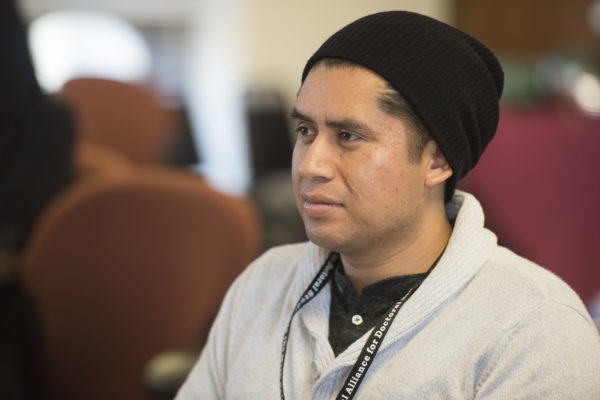
Solving the problem
On Nov. 4-6, Washington University hosted Field of Dreams, the annual conference of the Math Alliance, an organization dedicated to increasing the number of traditionally underrepresented groups in doctoral programs in the mathematical sciences.
WashU Expert: Expect Trump to gut environmental regulations
If a Trump administration follows his campaign rhetoric and advisers, then his most immediate and far-reaching environmental target will be domestic and international efforts to address climate change. Maxine Lipeles, director of the Interdisciplinary Environmental Clinic at the Washington University School of Law, offers her thoughts on Trump’s expected policies toward the environment.
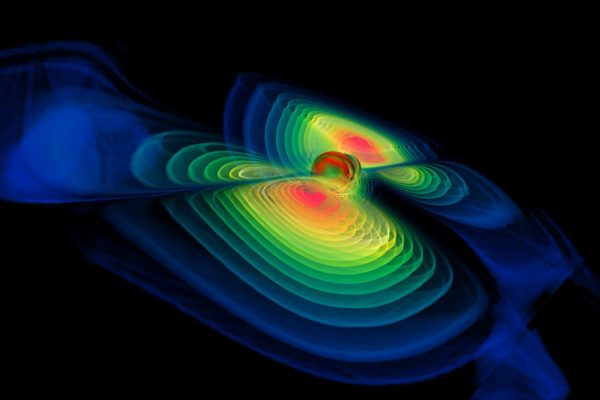
Gravitational waves the topic of 2016 Robert M. Walker Distinguished Lecture
Gabriela González, the spokesperson for the science collaboration that detected gravitational waves in spacetime passing over Earth for the first time this year, will deliver the ninth annual Robert M. Walker Distinguished Lecture at 7 p.m. Thursday, Nov. 17. The talk, hosted by the McDonnell Center for the Space Sciences, will take place in Whitaker […]

WashU Expert: What about environmental regulations?
During his campaign, President-elect Trump publicly stated that he would cut back the Environmental Protection Agency and also vowed to eliminate other federal regulations in place to protect the environment. Brent Williams, the Raymond R. Tucker Distinguished I-CARES Career Development Associate Professor, shares his views on what would happen should those changes take effect.
Election 2016 from Washington University’s view
At a transformative moment in our nation’s history, when America’s “Brexit vote” came to pass, where better than Washington University to bring together the thought leaders and experts from disparate fields covering the littered landscape that was, is and forever will be Election 2016?
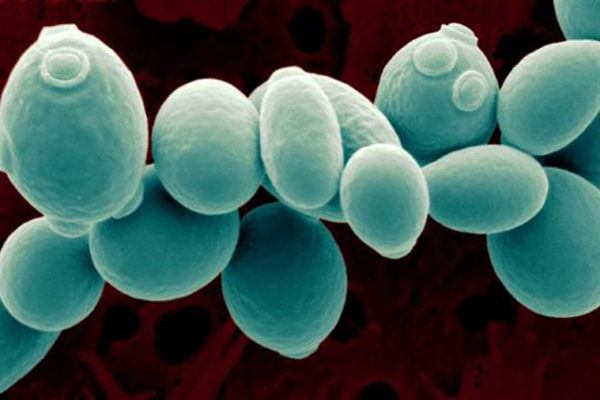
Changing cell behavior could boost biofuels, medicine
A computer scientist at Washington University in St. Louis has developed a way to coax cells to do natural things under unnatural circumstances, which could be useful for stem cell research, gene therapy and biofuel production.
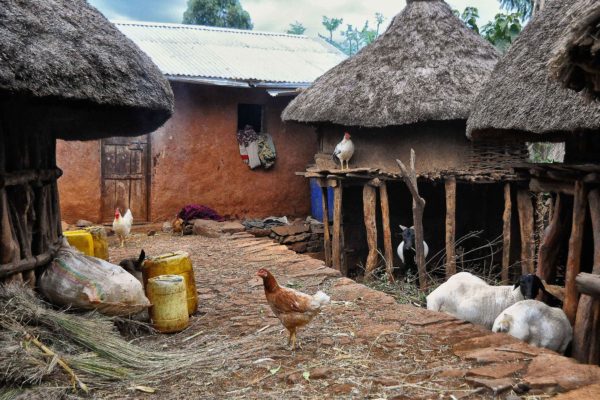
How the chicken crossed the Red Sea
The discarded bone of a chicken leg, still etched with teeth marks from a dinner thousands of years ago, provides some of the oldest known physical evidence for the introduction of domesticated chickens to the continent of Africa, research from Washington University in St. Louis has confirmed.
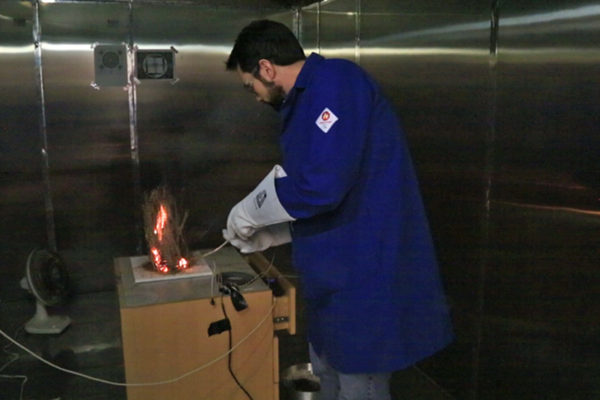
Recreating wildfires
Forest fires have enormous effects on both climate change and human health. A team of engineering scientists at Washington University in St. Louis are working through the fall recreating scaled-down forest fires in a lab to get a better understanding of what’s emitted during these natural disasters.
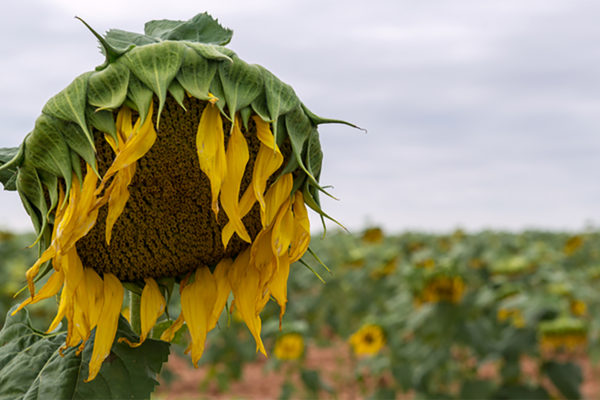
Mutant plants reveal temperature sensor
In a serendipitous moment, scientists studying light sensing molecules in plants have discovered that they are also temperature sensors.The discovery may eventually allow them to design crop varieties that are better able to cope with a warming world.
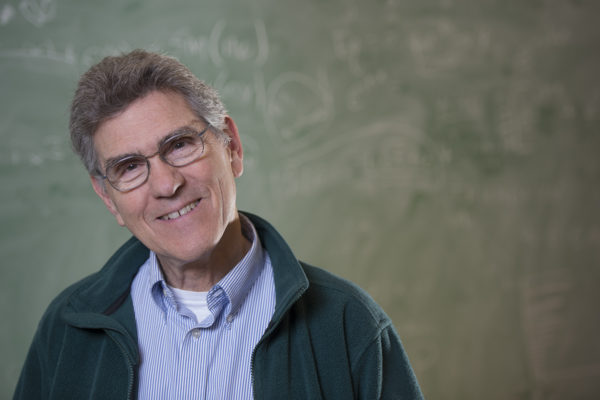
Physicist honored for finding new symmetry in space and time
The American Physical Society and the American Institute of Physics this month awarded the 2017 Dannie Heineman Prize for Mathematical Physics to Carl M. Bender of Washington University in St. Louis .
Older Stories