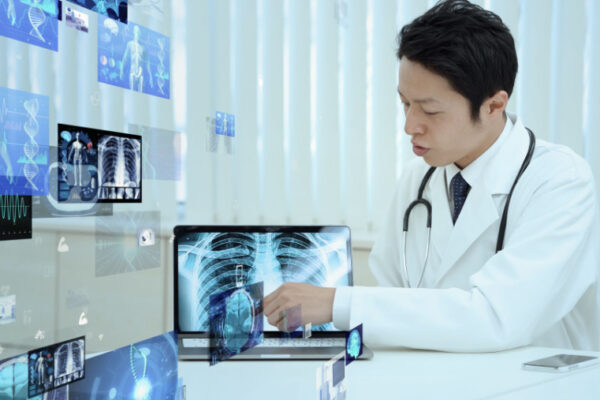
NIH grant supports Jha’s work on ethics of AI in imaging
A $314,807 grant from the National Institutes of Health (NIH) will support Abhinav Jha’s interdisciplinary work looking at the ethics of artificial intelligence implementation in the medical sphere.
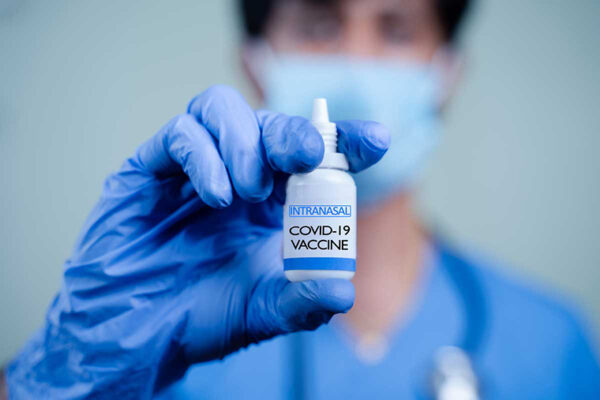
WashU COVID-19 nasal vaccine technology licensed to Ocugen
Washington University has licensed the rights to develop, manufacture and commercialize its proprietary COVID-19 nasal vaccine in the United States, Europe and Japan to Ocugen Inc., a U.S.-based biotechnology company.

Hidden microbiome fortifies animals, plants too
Pioneering research at Washington University helped people understand the fundamental role of gut microbes in human health and disease. Now a community of local scientists is learning more about the diverse microbial systems that support animals, plants and ecosystems.
Oyen and team receive funding to study placental function
An award from Wellcome Leap will support Michelle Oyen’s study of fetal growth restriction during gestational development. The program aims to reduce stillbirth rates by half.
Investigational drug for genetic form of ALS improves disease’s molecular signs
An international phase 3 clinical trial for a drug developed to treat a rare, inherited form of amyotrophic lateral sclerosis (ALS) showed that it reduced molecular signs of the fatal disease, but at six months did not improve motor control and muscle strength, according to Washington University School of Medicine researchers.
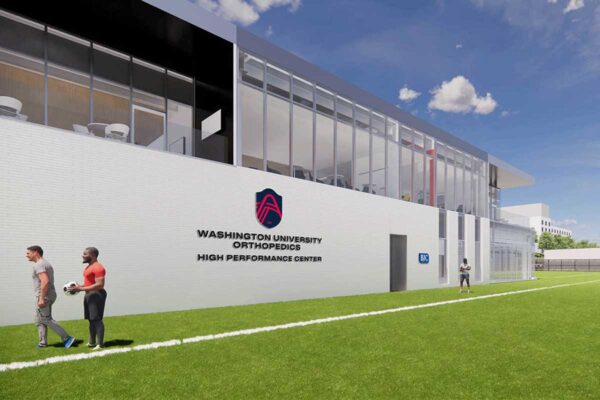
Washington University Orthopedics teams up with St. Louis CITY Soccer Club
St. Louis CITY Soccer Club has chosen physicians with Washington University Orthopedics as the club’s official team doctors and BJC HealthCare as medical services provider.

School of Medicine joins NIH initiative to expand use of AI in biomedical research
Washington University School of Medicine is joining the National Institutes of Health (NIH)’s Bridge2AI program, an estimated $130 million initiative. One project aims to develop a framework for using artificial intelligence to diagnose disease based on the sound of patients’ voices.
Evaluation of AI for medical imaging: A key requirement for clinical translation
To develop guidelines to evaluate artificial intelligence (AI) in nuclear-medicine imaging, an interdisciplinary team established by Richard L. Wahl, MD, director of Mallinckrodt Institute of Radiology (MIR) and led by Abhinav Jha, assistant professor at the McKelvey School of Engineering, published Recommendations for Evaluation of AI for Nuclear Medicine in the Journal of Nuclear Medicine.
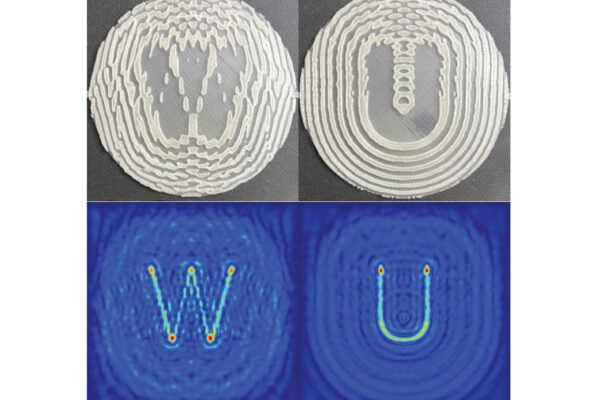
New practical method of producing Airy beams could enhance ultrasound
Researchers led by the McKelvey School of Engineering’s Hong Chen recently invented a technique for generating ultrasound waves that can self-bend, like a rainbow.
Restoring movement after spinal cord injury focus of new research
Ismael Seáñez received a five-year $1 million grant from the National Institutes of Health (NIH) to lead interdisciplinary spinal cord injury research.
Older Stories