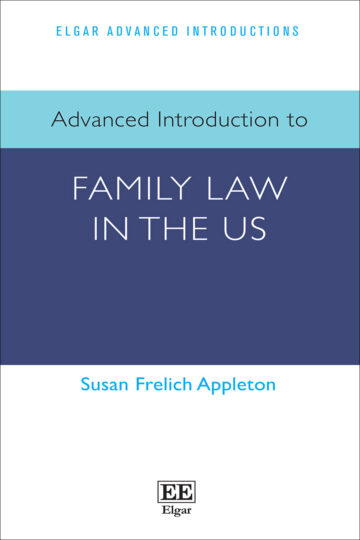
Elgar Advanced Introductions series
Elgar Advanced Introductions are stimulating and thoughtful introductions to major fields in the social sciences, business and law, expertly written by the world’s leading scholars. Designed to be accessible yet rigorous, they offer concise and lucid surveys of the substantive and policy issues associated with discrete subject areas.
This Elgar Advanced Introduction provides key insights into family law in the United States. In the midst of consequential changes wrought by the US Supreme Court, this book traces the evolution of the field from its origins in the law of domestic relations to the more modern regime of family law.
Key features include:
● Integrates state law, federal law, legal scholarship and literature from other disciplines.
● Identifies the regulation of sex and the policy of keeping dependency private as family law”s principal enduring features.
● Surveys different topics in family law including: marriage, nonmarriage and dissolution; pregnancy; parentage; and children.
● Reviews the impact of the US Supreme Court’s Dobbs decision on all of family law in the United States and looks ahead to the future of family law.
Advanced Introduction to Family Law in the U.S. is a valuable resource for teaching and learning family law, and also provides a sophisticated entry point for students and academics in gender studies and legal studies.
About the author
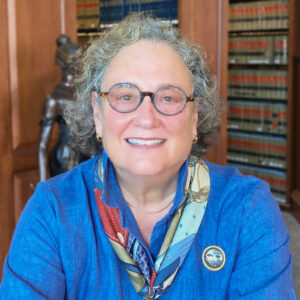
Susan Frelich Appleton, the Lemma Barkeloo & Phoebe Couzins Professor of Law, is a nationally known expert in family law and feminist legal theory. Her research, scholarship, and teaching address reproductive justice, parentage, gender, sexualities and public assistance for families.
Co-author of six editions of a family law casebook, Appleton has published extensively on family law matters and feminist legal theory in law reviews and scholarly collections. In 2021, she received the inaugural award for outstanding contributions and achievements in the field from the AALS Section on Family & Juvenile Law, and in 2018, she received a Dukeminier Award from UCLA’s Williams Institute, which recognizes the best publications on sexual orientation and gender identity law.