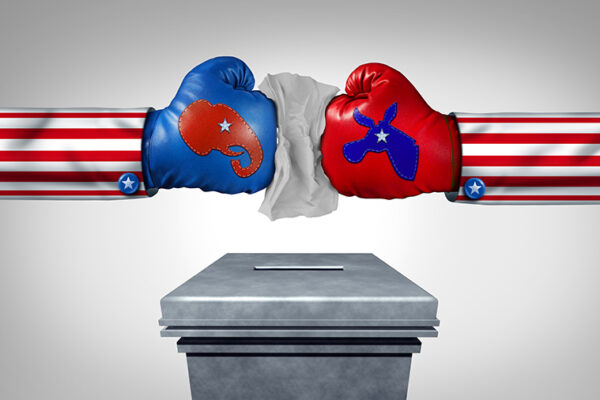
Rigged election? Partisans view threats to election integrity differently
Even before they cast their votes, partisans of different stripes are poised to question the legitimacy of the election outcome, but for different reasons. According to political scientist Steven Smith at Washington University in St. Louis, findings of The American Social Survey, sponsored by the university’s Weidenbaum Center, indicate that the intensity of candidate and media attention about voting fraud threats — real or not — is influencing views of the legitimacy of the election outcome in November.

Perception matters: Consumers prefer ‘natural’ prevention options
New Olin Business School research suggests that if consumers view a vaccine more like a curative to the epidemic, rather than as a preventative for the self, they will be more receptive toward it.
Lee twice recognized as leader in field
Hedwig Lee, professor of sociology in Arts & Sciences at Washington University in St. Louis, was elected to the prestigious Sociological Research Association. Lee also was appointed to the National Academies of Science, Engineering, and Medicine’s ad hoc committee, “Best Practices for Implementing Decarceration as a Strategy to Mitigate the Spread of COVID-19 in Correctional Facilities.”
Wingfield’s book wins C. Wright Mills Award
Adia Harvey Wingfield, the Mary Tileston Hemenway Professor in Arts & Sciences at Washington University in St. Louis, received The Society for the Study of Social Problems’ C. Wright Mills Award for her 2019 book, “Flatlining: Race, Work, and Health Care in the New Economy.”

How regulations meant to increase poor, minority lending ultimately backfire
New Olin Business School research has exposed a significant increase in poor customer service, fraud and mis-selling by retail banks in low-to-moderate income areas targeted by the Community Reinvestment Act, especially those with a high minority population.

Free speech? Nearly half of Americans self-censor, study finds
In an age when social media ensures everyone can have a voice, more Americans than ever — some 40% — are choosing to keep their mouths shut rather than express their opinions.

Rewriting history: New evidence challenges Euro-centric narrative of early colonization
New research from Washington University in St. Louis provides evidence that Indigenous people continued to live in southeastern U.S. and actively resist European influence for nearly 150 years after the arrival of Spanish explorers in the 1500s.

Mothers’ paid work suffers during pandemic, study finds
New research from Washington University in St. Louis finds early evidence that the pandemic has exacerbated — not improved — the gender gap in work hours, which could have enduring consequences for working mothers.

Eviction moratoriums are incomplete solution
A federal moratorium on evictions is just one piece of the puzzle. Without comprehensive solutions, we could be facing a repeat of the 2007-08 financial crisis, said Radhakrishnan Gopalan, a finance expert at Washington University in St. Louis who has studied the effect of health insurance on home payment delinquency.
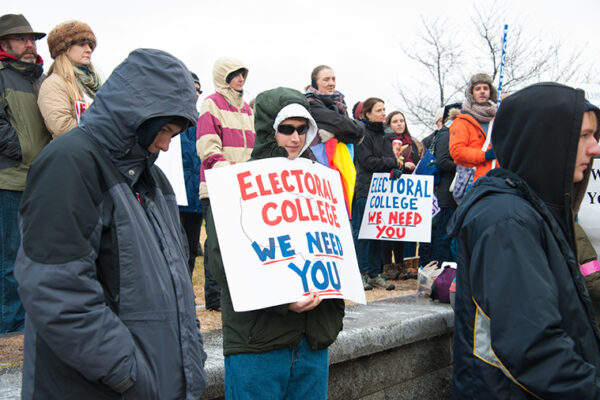
Electoral College ruling contradicts Founders’ ‘original intent’
While the Supreme Court decision limits the independence of electors and prevents a potential source of uncertainty in the upcoming presidential election, it contradicts the Constitution framers’ intentions for the Electoral College, according to a political science expert at Washington University in St. Louis.
View More Stories