
Using nighttime air chemistry to track ozone impact
St. Louis’ hazy summers can sometimes be too hot to handle for people with respiratory issues; increased ozone levels can make the air tough to breathe. A team of engineers at Washington University collaborated on a study of St. Louis’ late-summer air quality. They found that naturally occurring compounds processed in the night sky can have a big impact on ozone levels the next day.

WashU Expert: New crowdfunding rules expand entrepreneurial playing field
Today, new rules go into effect that allow anyone to invest in a startup and receive shares of that startup. Previously, the Securities and Exchange Commission required investors backing private companies to have a certain amount of net worth. A Washington University in St. Louis faculty member says the measures will expand the entrepreneurial playing field, to a point.

Huntington’s Disease target of $4.5 million in NIH grants
Rohit V. Pappu, the Edwin H. Murty Professor of Engineering in the School of Engineering & Applied Science at Washington University in St. Louis, has received two grants from the National Institutes of Health totaling more than $4.5 million to study the causes behind Huntington’s disease that may ultimately provide clues for a treatment or cure.

What studying hand-washing is teaching about compliance
In many workplaces, standard processes are the key to a successful operation, ensuring efficiency and safety. New research from Olin Business School at Washington University in St. Louis shows that motivating compliance with standard processes via electronic monitoring can be a highly effective approach, despite concerns about employee backlash. However, the research also highlights that managers cannot simply “monitor and forget.”

WashU Expert: The President’s plan to fight tax evasion
On May 6, President Barack Obama introduced executive reforms designed to eliminate loopholes that allow foreigners to conceal tax fraud and evasion in the United States. Olin Business School’s Lamar Pierce said the move is an effort to show U.S. global partners that it is ready to practice what it preaches when it comes to curbing shadowy financial transactions.
A new route to chaos
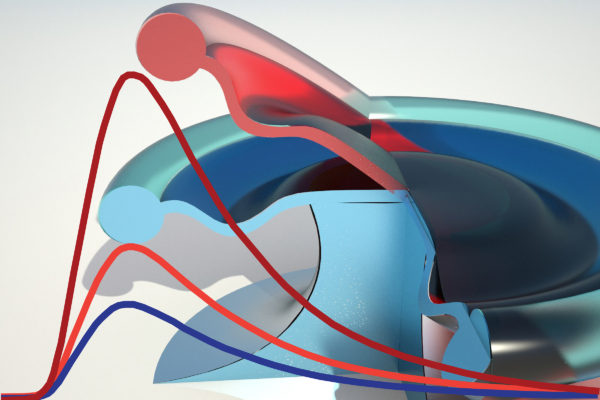
Researchers in the School of Engineering & Applied Science at Washington University in St. Louis have discovered a novel route to encode chaos on light in an optomechanical microresonator system.

Nanoparticles present sustainable way to grow food crops
Engineers at Washington University in St. Louis are using nanoparticle technology in an effort to meet the ever-increasing demand for food. Their innovative technique boosts the growth of a protein-rich bean by improving the way it absorbs nutrients, while reducing the need for fertilizer.
New Family Business Program announced at Olin
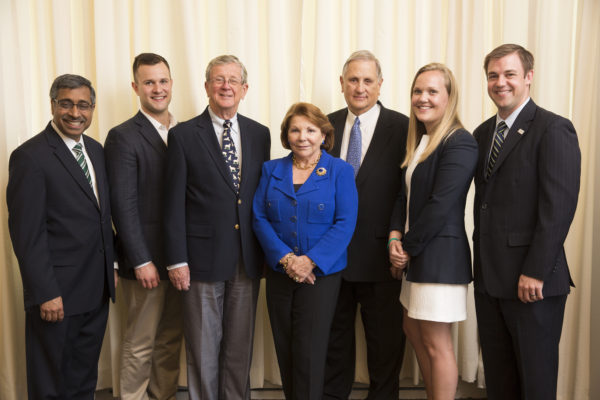
Mahendra R. Gupta, dean of Olin Business School, recently announced a four-year, $1.09-million gift from Roger and Fran Koch and Paul and Elke Koch that will launch the Olin Family Business Program.
Olin Business School recognizes distinguished alumni at annual dinner
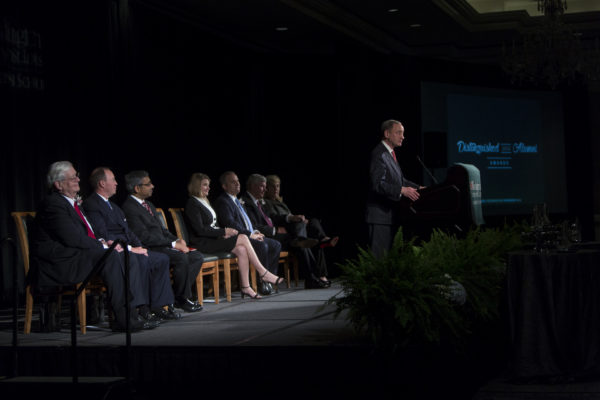
The Olin Business School recently honored several graduates who have attained distinction in their careers at its 30th Distinguished Alumni Awards Dinner, held at the Ritz-Carlton April 15.
School of Engineering & Applied Science honors distinguished alumni
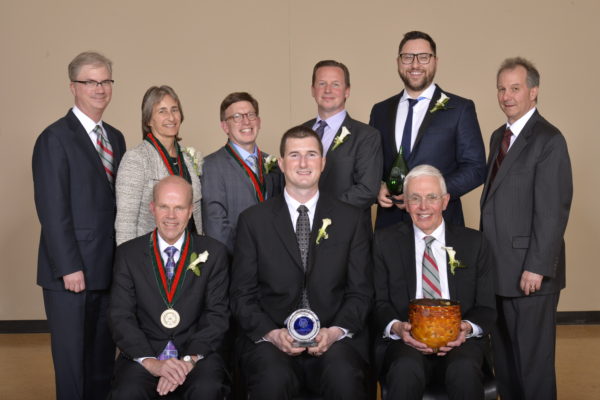
The School of Engineering & Applied Science celebrated the extraordinary accomplishments of six alumni and a former dean at its annual Alumni Achievement Awards dinner April 7.
View More Stories