In 1985, my writing partner Bill Dial and I were riding high on the rhythms of network television. I was the writer-producer of “Simon & Simon,” a top-ten CBS procedural, and Bill was a veteran mainstay of “WKRP in Cincinnati.” We knew how to structure a joke, and we knew how to fix a script. But nothing in the standard Hollywood playbook prepares you for the moment you enter the orbit of Dolly Parton.
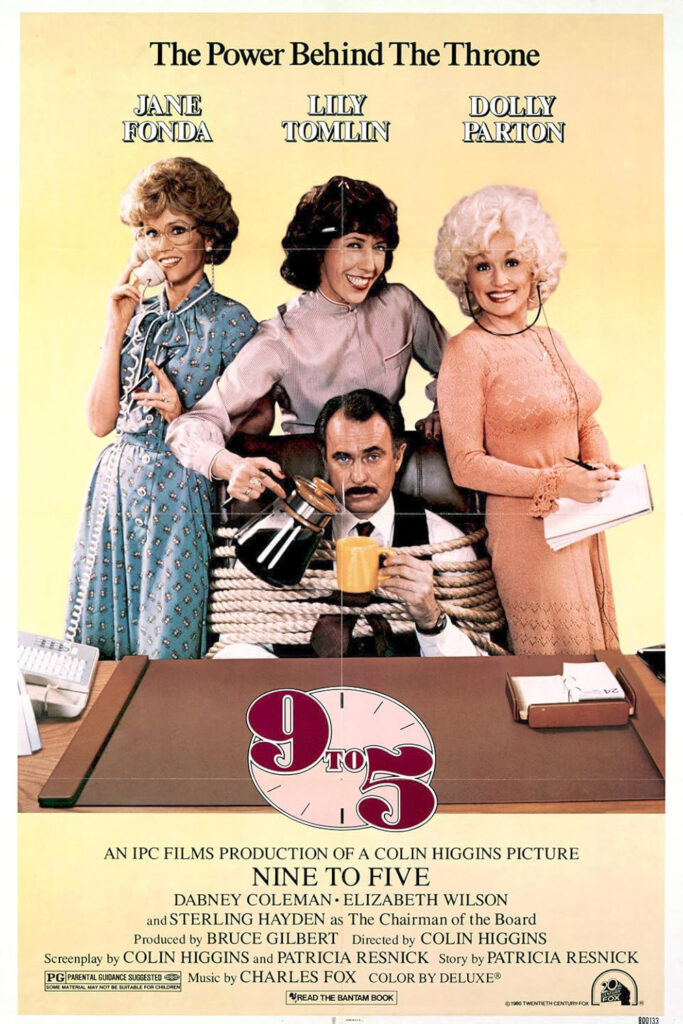
The proposition from Universal Pictures was electric: Dolly had conceived an original story designed to reunite her with Jane Fonda and Lily Tomlin, capitalizing on the massive, culture-shifting success of 9 to 5. It wasn’t a literal sequel. Instead, Dolly envisioned an ensemble of ordinary, working-class women—friends pushing 45, watching the world pass them by from the trenches of a suburban Midwestern mall.
Dolly’s character was a hairdresser with her own chair at a salon called Chez Claude, owned by a delightfully sleazy conman. Lily’s character held down the fort at Barnes & Noble, while Jane’s character managed a massive, Dick’s-style sporting goods franchise. To survive their drab routines, the trio leaned entirely on their friendship and their weekly wine-tasting nights.
But Dolly’s narrative ambition didn’t stop at the mall food court. She pitched the tone as “‘9 to 5’ meets James Bond.” Desperate for an escape, the friends book a cut-rate European tour run by a shady travel agency. Unbeknownst to them, the agency is a CIA front utilizing innocent, unassuming Americans as bait to lure a dangerous rogue arms dealer. Suddenly, these three mall workers are thrust into an international espionage thriller, tasked with locating a doomsday railgun hidden deep within the Carpathian Mountains.
When Bill and I first met Dolly and her formidable producing partner, Sandy Gallin, at Sandy’s sprawling Beverly- hillside bungalow, I was immediately struck by two things. First, the warmth of her embrace. She hugged us like old family. Second, a detail I can finally reveal, making me one of the few people on earth to see it: Dolly was without her iconic wig. I was so overwhelmed by her presence that I failed to immediately clock the short, little red duck fur that covered her head.
Any assumption that Dolly was just a charismatic singer playing at filmmaking vanished within minutes. Her intellect was razor-sharp. As she pitched, she effortlessly slipped into the distinct personas of all three characters. She gave them high emotional IQs, fully dimensional yearnings, and a profound goodness that made their comedic plight intensely authentic.
Inspired, Bill and I retreated to his poolside guesthouse office. We didn’t stop laughing until we hit FADE OUT on the first draft. Subsequent meetings with Dolly were a joy; we riffed on dialogue, entirely invested in the world she had built. Dolly knew exactly what she wanted, and when she pronounced the script ready for the studio, we were over the moon.
After a weekend of agonizing nail-biting, the call came from the “Black Tower”—Universal’s monolithic, ominous executive office building. Frank Price, President of Universal, and Kerry McCluggage, VP of Motion Pictures, loved it. They thought we had delivered the goods.
We were summoned to the Tower for notes. As a show of strength, Dolly joined Bill, Sandy, and me. The stage was set for what remains the weirdest meeting of my Hollywood career.
After initial handshakes and small talk, Dolly excused herself to use the executive restroom. More small talk followed, but as the minutes ticked by, the atmosphere in the room began to shift. Frank Price, the suave mandarin sitting atop the throne of the world’s most powerful entertainment empire, was growing visibly impatient. Dolly was taking a very long time in what I can only assume was a lavish, palatial washroom.
Finally, breaking the tense silence, Price leaned over and buzzed his intercom: “Wendy, would you please retrieve Ms. Parton from the bathroom.”
Bill and I exchanged nervous glances. What the hell was happening? Was this some galactic, high-stakes Industry power game? We shot a look at Sandy Gallin, but his face was unreadable.
Then, the door opened. Dolly made her entrance.
Her mega-watt smile instantly blanketed the room, completely extinguishing Frank’s brewing corporate blaze. Not another word was said about the delay. We had a spectacular meeting, walked out with minimal notes, and prepared to send the polished screenplay to Jane and Lily.
We never got to meet them. Hollywood, as it often does, broke our hearts through the mechanics of the calendar. Both actresses had schedules locked for the next year and a half, preventing them from signing on. Bill and I had been around the block, but a heartbreak like that still stings.
But not to Dolly.
She called us back up to Sandy’s estate. She wasn’t disappointed in the slightest. “Forget the three women,” she said brightly. “Let’s retool the screenplay and recast. Let’s make it a duo. Can you write it for me… and my friend, Cher?”
We did, of course. Not because we genuinely thought a Carpathian spy thriller starring Dolly and Cher could survive the studio system, but because by that time, Dolly wasn’t just a megastar boss. She had become a friend. “Brass Angels” never made it to the screen, but for one wild year, two wide-eyed television writers got to watch a legend turn a Midwestern mall into a playground for James Bond.