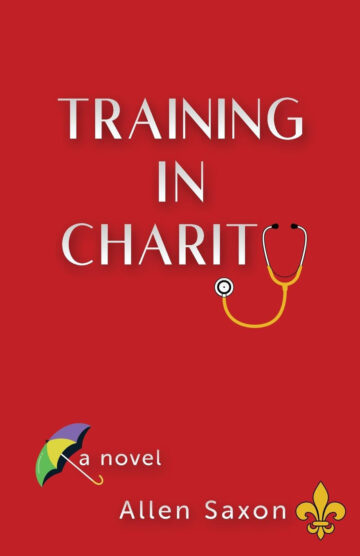
In the gritty heart of 1970s New Orleans, Adam Sinclair, a third-year medical student, steps out of the lecture hall and into the chaos of the real world. After two years of studying anatomy charts and memorizing diseases, he’s thrust into his very first clinical rotation at the legendary-and infamous-Charity Hospital. Assigned to a high-pressure surgical service, Adam and his classmates must keep pace with the relentless rhythm of patient care, juggling massive amounts of medical knowledge while fumbling to learn the most basic skills of practice.
They join the Chairman’s service, the arena where reputations are made and futures broken, finding themselves at the absolute bottom of a steep hierarchy. There is no cushioning, no pause-only the sharp edge of responsibility honed daily by exhaustion and fear. Their guides through this trial by fire are the residents: Todd Wantz, a demanding intern who rules with a razor-like tongue; Larry Kochenko, whose unshakable calm provides rare moments of grace; and Bennett Turk, whose skill and compassion are clouded by the looming threat of dismissal, due to an attending surgeon who sees him as too slow with the scalpel.
As the layers rise, so too does the mastery. Terry Rogers, the third-year resident, is brisk and technically polished as he orchestrates the service’s daily grind. Togushi Kittamura, a practiced surgeon from Japan, dazzles in the operating room-even if his precise hands are steadier than his English. Above them, Tom Holiday and Bobby Doyle-the fifth-year chiefs-appear to the students as fully formed surgeons, figures of awe and aspiration.
Caught in this crucible, Adam soon learns that medicine is far messier, more human, and infinitely more humbling than his textbooks ever suggested. Each patient carries a story too fragile for rote knowledge, each day another test marked not in ink but in blood, sweat, and doubt. And looming ahead like the sky before a hurricane is the final reckoning: a single exam that will measure not only how much he has learned, but whether he can survive the pressure of becoming a physician at all.
Told with humor and empathy, Training in Charity, by Allen Saxon, AB ’71, captures what it meant to begin a life in medicine before computers and technology softened the edges — a time when skill was learned by doing, compassion was earned at the bedside, and the making of a doctor was as raw and real as the city that held him.
Read about Saxon’s first book, The Climber of Point du Hoc, on the WashU Bookshelf.