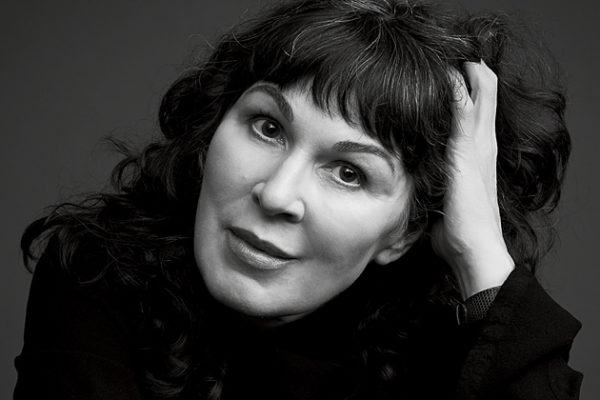
Mary Jo Bang almost gave up on Dante.
As graduate students, she and a classmate spent a year reading Inferno and Purgatorio, the first two books of The Divine Comedy. Taking turns reading the work aloud, canto by canto, from two different translations, they discussed the differences and compared the translators’ choices. Why this word and not that?
When they got to the third book, Paradiso, “Suddenly the language changed,” Bang remembers. In the translation they chose to begin with, “There were ‘-eth’ endings on every verb.” Heaven “receiveth of his light” and “our intellect sinketh.”
The problem wasn’t Dante, says Bang, professor of English in Arts & Sciences and herself a nationally recognized poet. Dante’s rhythms are hypnotic. His psychological acuity is stunning. His visual descriptions remain unmatched. But some combination of The Divine Comedy’s spiritual themes and literary stature had tempted the translator Philip H. Wicksteed, a Unitarian minister, to adopt an elevated, King James Bible-like style.
Which is ironic, considering that Dante, unlike many of his contemporaries, did not write in Latin. “Dante wrote in the vernacular,” Bang says. “He also wrote about why he wrote in the vernacular. He did not want the language of the poem to be frozen in time. He wanted it to have the warmth of spoken language.” Additionally, Bang says, “He wanted his poem to be read by everyone, not only by those who had specialized learning.”
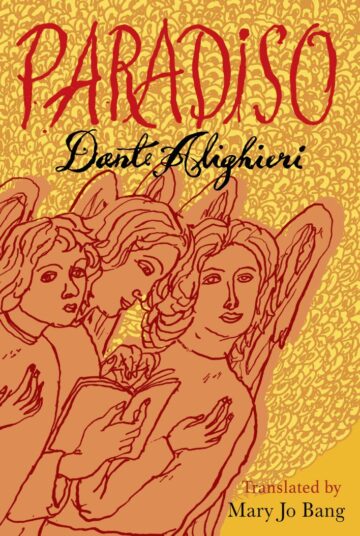
Now Bang has released her own translation of Paradiso (2025, Graywolf Press). Like her celebrated Inferno (“thrillingly contemporary” — Vanity Fair) and Purgatorio (“sparkling,” “a remarkable lightness of spirit” — New York Review of Books), Bang’s Paradiso renders Dante’s crisp tercets in 21st-century American English.
The project began almost as a whim, inspired by conceptual poet Caroline Bergvall. In “Via (48 Dante Variations),” from the collection Fig: Goan Atom 2 (2005), Bergvall arranges, in alphabetical order, 47 English-language versions of Inferno’s first three lines.
The effect is mesmerizing, Bang says. “The sound is amazing. The poem operates in the poetic tradition of repetition with revision,” she says. “No two translations were exactly alike.”
Notably absent was a translation using present-day vocabulary and speech patterns. “What would that sound like?” Bang wondered. She decided to experiment with putting those three lines into everyday English, while incorporating elements of contemporary poetry: alliteration, assonance and internal rhyme.
Bang had so much fun that she translated the next two stanzas. She then went over to Olin Library, checked out a dozen more translations, and completed the first canto. “That was so satisfying, I thought, maybe I’ll do all of Inferno.”
The Mary Jo Bang Prize
Earlier this year, the departments of English and of Comparative Literature and Thought, both in Arts & Sciences, announced the establishment of the Mary Jo Bang Prize for Poetry Translation. Established through an anonymous, endowed gift to honor Bang and her accomplishments as a poet and translator, the prize awards $1,000 to a WashU graduate student for the English translation of three poems by a single poet.
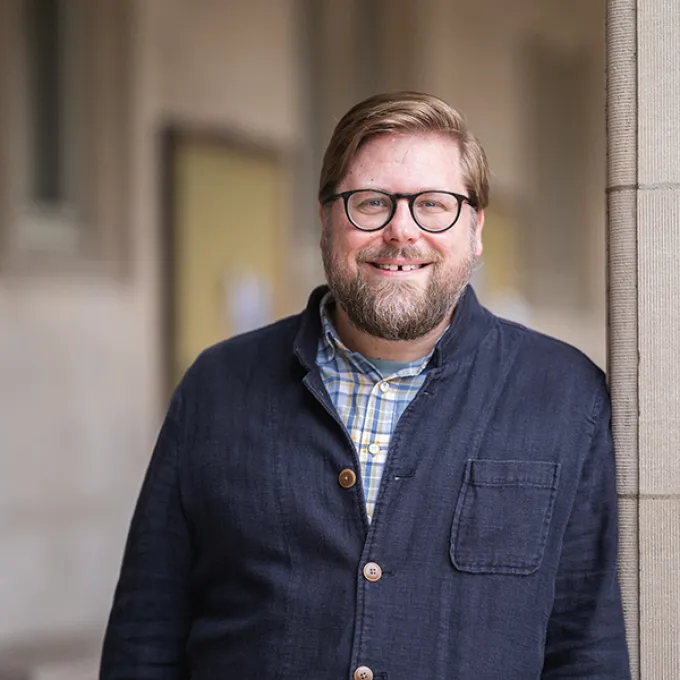
The first recipient was Derick Mattern, PhD ’25, who learned of the prize two weeks before he received his doctorate in comparative literature. Mattern won for his translation of sections from Passage to Efsus by Yücel Kayıran from Turkish into English.
“I’m really touched that someone would choose to create this prize, and I’m pleased that we now have a prize for translation,” Bang told Arts & Sciences’ Ampersand. “It’s an encouragement for our graduate students to think about the possibilities. In translation — one becomes sensitive to language in a way that will influence one’s own writing.”
For the next two decades, Dante was an almost daily part of Bang’s writing practice. A single afternoon might find her switching back and forth between writing new poems and translating The Divine Comedy.
The arrangement proved productive. While working on Dante, Bang also published five original collections, including the National Book Critics Circle Award-winning Elegy (2007); two chapbooks; a translation of a volume of poems by the German poet Matthias Göritz (Colonies of Paradise, Northwestern University Press, 2022) and a co-translation, with Yuki Tanaka, of poems by the Japanese surrealist Shuzo Takiguchi (A Kiss for the Absolute: Selected Poems of Shuzo Takiguchi, Princeton University Press, 2024).
Still, given her graduate school experience, Bang approached Paradiso with mild trepidation. Inferno’s cinematic tortures horrify and delight. Purgatorio soars with reunited love, as Dante finds his lost Beatrice. But when the journey ascends to heaven, what more is there to say?
Quite a lot, of course.
“It’s a very complicated heaven,” Bang says. “Dante is not just reflecting Catholic thought. He is drawing from Aristotle, Plato, Albertus Magnus — all of these thinkers and writers — and from his own psychological understanding of human nature.”
Theologically, heaven suggests eternal joy and fulfillment. But even in paradise, Dante remains a wanderer — an observer rather than a resident. It’s a perspective that echoes the author’s life. Forced from his beloved Florence in 1302, by political and ecclesiastical machinations, Dante wrote The Divine Comedy entirely in exile, completing Paradiso shortly before his death in 1321.
“He had to leave everything he loved,” Bang says, “including his wife and his children. When his sons came of age, the writ of exile was extended to them so they had to leave Florence as well. That’s nearly 20 years of traveling Italy, going from one noble’s house to another, relying on the kindness of strangers.”
Paradiso represents the culmination of all Dante’s journeys. Here, the poet reveals the structure of the universe, the nature of the blessed, and the divine love “that moves the sun and the other stars.” Throughout, Dante is searching for knowledge, which he refers to as “the bread of angels.”
Towards the beginning of Canto II, Dante warns the reader that unless they, too, are seeking that knowledge, they shouldn’t follow him. Bang’s translation reads:
Turn back and take another look at your coast:
Don’t set out on the open sea because maybe,
If you lose sight of me, you’ll be totally lost.
The waters I’m sailing have never been crossed.