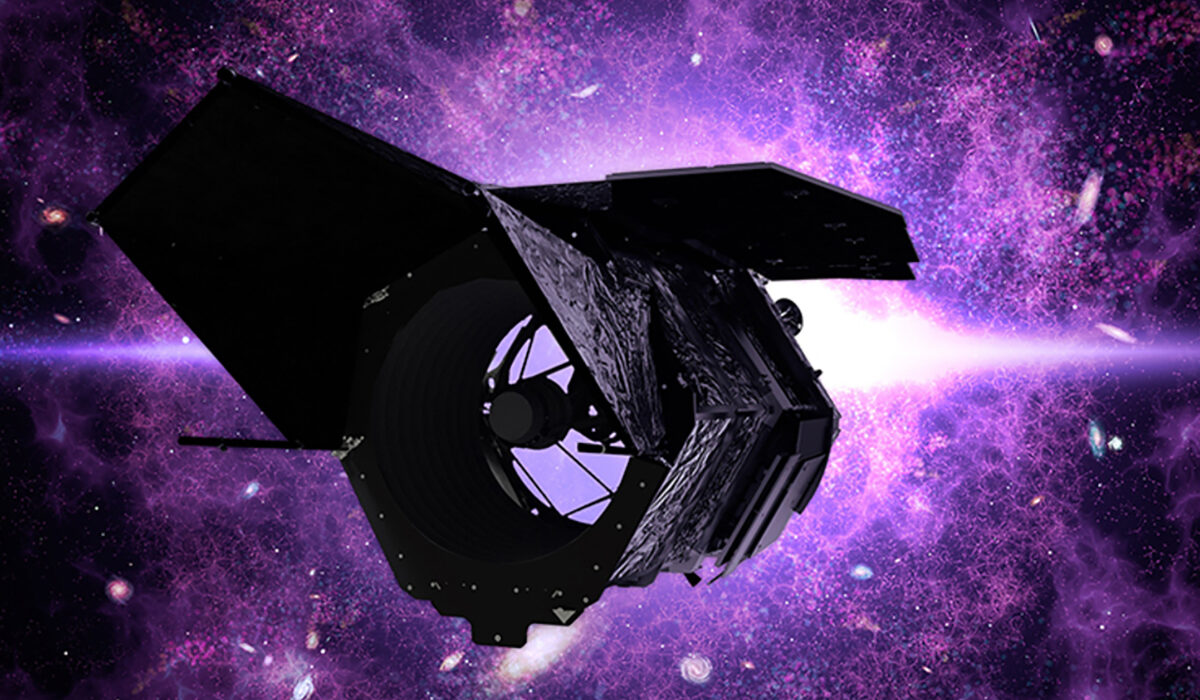
Ahead of the scheduled Aug. 30 launch of NASA’s Nancy Grace Roman Space Telescope, several Washington University in St. Louis researchers have been selected to play important roles in the mission’s inaugural science program. The Roman telescope promises to transform our understanding of the universe. NASA will use the Roman telescope to investigate dark energy, discover thousands of exoplanets and address a broad range of questions in astrophysics through wide-field surveys of the universe.
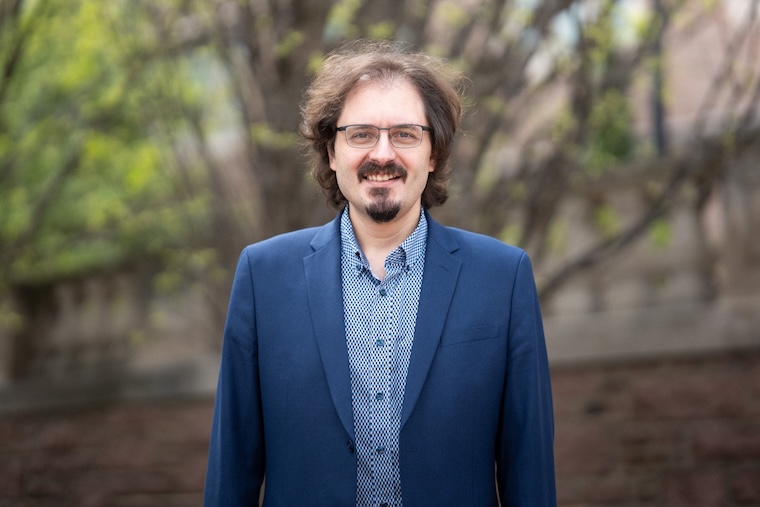
These selections build on WashU’s existing leadership in the Roman mission. Since 2023, Tansu Daylan, an assistant professor of physics in Arts & Sciences, has led the Roman Wide Field Science program, “Preparing for a Leap: Precursor Strong Lensing Science with Roman Towards Precision Cosmology,” which developed methods, simulations and community resources to help other scientists use Roman’s strong gravitational lenses to study dark matter and cosmology.
“The newly approved Cycle 1 programs highlight the expertise of researchers at the McDonnell Center for the Space Sciences (MCSS) in strong gravitational lensing, cosmology, exoplanets and time-domain astrophysics,” Daylan said.
Roman’s broad scientific reach is one reason astronomers are so excited about the mission, said William McKinnon, interim director of the MCSS and the Clark Way Harrison Distinguished Professor of Arts & Sciences.
“The Nancy Grace Roman Space Telescope, with its wide-field infrared survey capabilities, is a superb complement to the James Webb Space Telescope, which can see even deeper on specific targets,” McKinnon said.
Together, the new Cycle 1 programs expand WashU’s contributions across the mission, from mapping dark matter and measuring cosmic expansion to studying black holes and searching for planets orbiting white dwarf stars. The four projects include:
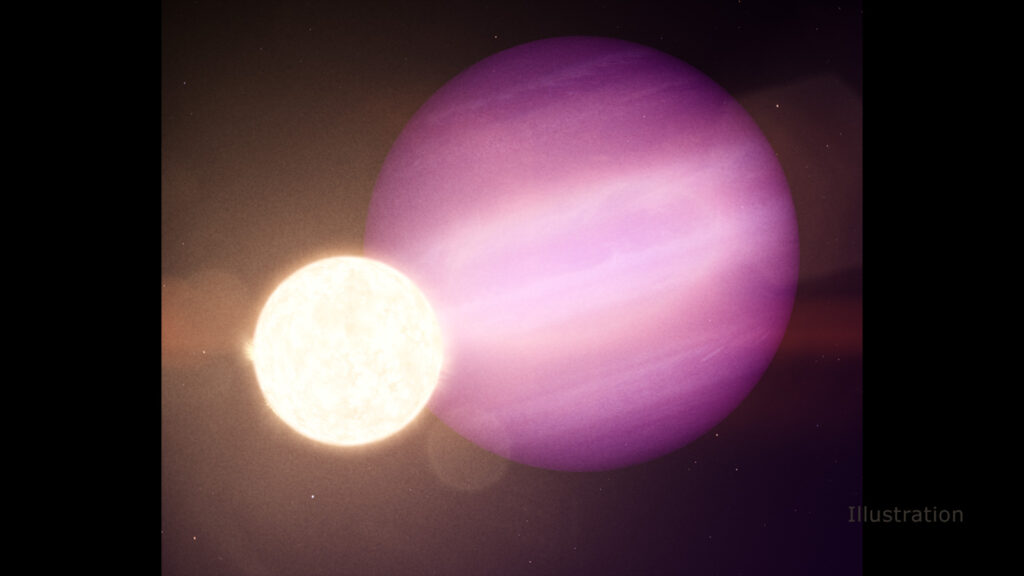
- Searching for planets orbiting white dwarfs. The team aims to construct a robust catalog of white dwarfs in the survey field and develop a specialized pipeline to search their light curves for planetary transits. McDonnell postdoctoral fellow Zifan Lin serves as principal investigator, with Daylan as co-principal investigator.
Read the related story on the MCSS website.
- Building Roman’s definitive strong-lens catalog. The program will develop tools to identify and characterize gravitational lenses; produce initial measurements of the detected systems; and better understand which types of lenses Roman is most likely to discover. Led by Stony Brook University, Daylan is a co-principal investigator for this project, while WashU graduate student Bryce Wedig is a co-investigator.
Read the related story on the MCSS website.
- Measuring cosmic expansion with lensed supernovae. This project will discover and analyze supernovae whose light is magnified and split into multiple images by intervening galaxies. Daylan is a co-investigator.
- Illuminating dark energy and black hole growth. This project will combine Roman’s high-resolution imaging with deep ground-based spectroscopy to identify and study rare classes of strong gravitational lenses. Daylan is a co-investigator.
Read more about the projects on the MCSS website.